-
Mayur Vihar 3 Delhi, 110096 India
Free Course
History Chapter 1-The Rise of Nationalism in Europe. अध्याय 1-यूरोप में राष्ट्रवाद का उदय PYQ
History Chapter 1-The Rise of Nationalism in Europe. अध्याय 1-यूरोप में राष्ट्रवाद का उदय
Course Overview
Class 10 History – Chapter 1
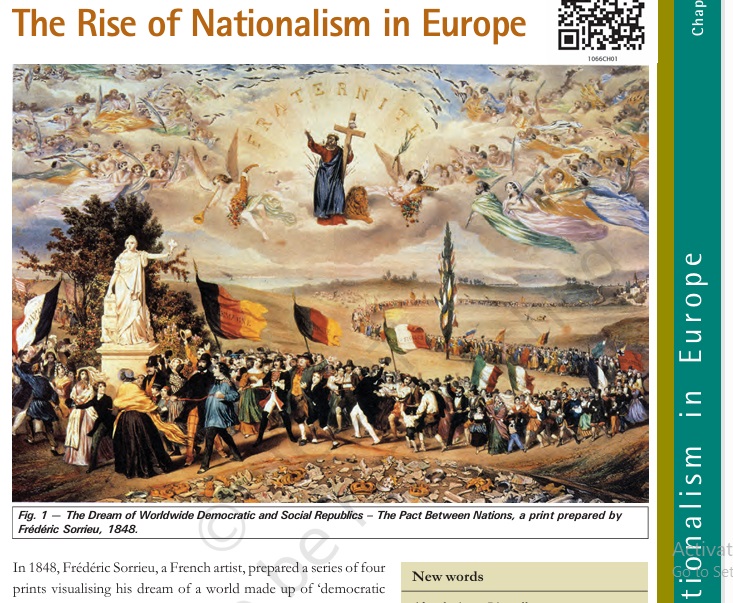
The Rise of Nationalism in Europe
यूरोप में राष्ट्रवाद का उदय
MCQs – Questions 1–10
1. Who founded the secret society Young Italy?
यंग इटली नामक गुप्त संस्था की स्थापना किसने की थी?
A. Giuseppe Garibaldi
B. Giuseppe Mazzini
C. Otto von Bismarck
D. Victor Emmanuel II
Answer / उत्तर: B. Giuseppe Mazzini
Explanation / व्याख्या: Giuseppe Mazzini founded Young Italy in 1831 to promote a united and republican Italy.
ज्यूसेपे मैजिनी ने 1831 में एकीकृत और गणतांत्रिक इटली के निर्माण के उद्देश्य से यंग इटली की स्थापना की थी।
2. What did the Napoleonic Code establish in 1804?
1804 की नेपोलियन संहिता ने क्या स्थापित किया?
A. Privileges based on birth / जन्म आधारित विशेषाधिकार
B. Equality before law / कानून के समक्ष समानता
C. Absolute monarchy / निरंकुश राजतंत्र
D. Feudal privileges / सामंती विशेषाधिकार
Answer / उत्तर: B. Equality before law
Explanation / व्याख्या: The Napoleonic Code abolished privileges based on birth and established equality before the law and protection of the right to property.
नेपोलियन संहिता ने जन्म आधारित विशेषाधिकारों को समाप्त किया तथा कानून के समक्ष समानता और संपत्ति के अधिकार की सुरक्षा को स्थापित किया।
3. Which country led the movement for the unification of Germany?
जर्मनी के एकीकरण के आंदोलन का नेतृत्व किस देश ने किया?
A. Austria / ऑस्ट्रिया
B. Prussia / प्रशा
C. France / फ्रांस
D. Italy / इटली
Answer / उत्तर: B. Prussia
Explanation / व्याख्या: Prussia took the leadership of German unification under Otto von Bismarck.
ओटो वॉन बिस्मार्क के नेतृत्व में प्रशा ने जर्मनी के एकीकरण का नेतृत्व किया।
4. Who was the chief architect of German unification?
जर्मनी के एकीकरण का मुख्य वास्तुकार कौन था?
A. Giuseppe Mazzini
B. Otto von Bismarck
C. Giuseppe Garibaldi
D. Metternich
Answer / उत्तर: B. Otto von Bismarck
Explanation / व्याख्या: Bismarck used diplomacy and warfare to unite the German states under Prussian leadership.
बिस्मार्क ने कूटनीति और युद्ध के माध्यम से जर्मन राज्यों को प्रशा के नेतृत्व में एकजुट किया।
5. The Frankfurt Parliament was convened in which year?
फ्रैंकफर्ट संसद का आयोजन किस वर्ष किया गया था?
A. 1815
B. 1830
C. 1848
D. 1871
Answer / उत्तर: C. 1848
Explanation / व्याख्या: The Frankfurt Parliament was convened in the Church of St Paul in Frankfurt in 1848.
1848 में फ्रैंकफर्ट की सेंट पॉल चर्च में फ्रैंकफर्ट संसद का आयोजन किया गया था।
6. Who was proclaimed the German Emperor in 1871?
1871 में जर्मन सम्राट किसे घोषित किया गया?
A. Otto von Bismarck
B. William I
C. Napoleon III
D. Frederick William IV
Answer / उत्तर: B. William I
Explanation / व्याख्या: William I, King of Prussia, was proclaimed the German Emperor in January 1871 at Versailles.
प्रशा के राजा विलियम प्रथम को जनवरी 1871 में वर्साय में जर्मन सम्राट घोषित किया गया।
7. Which female allegory represented the German nation?
जर्मन राष्ट्र का प्रतिनिधित्व करने वाली महिला रूपक आकृति कौन थी?
A. Marianne
B. Germania
C. Liberty
D. Bharat Mata
Answer / उत्तर: B. Germania
Explanation / व्याख्या: Germania was the allegorical representation of the German nation.
जर्मेनिया जर्मन राष्ट्र की रूपकात्मक महिला आकृति थी।
8. What was the Zollverein?
जॉलवेरिन क्या था?
A. A military alliance / सैन्य गठबंधन
B. A customs union / सीमा शुल्क संघ
C. A secret society / गुप्त संस्था
D. A political party / राजनीतिक दल
Answer / उत्तर: B. A customs union
Explanation / व्याख्या: Zollverein was a customs union formed in 1834 at the initiative of Prussia. It abolished tariff barriers among many German states.
जॉलवेरिन 1834 में प्रशा की पहल पर बनाया गया सीमा शुल्क संघ था। इसने अनेक जर्मन राज्यों के बीच शुल्क संबंधी बाधाओं को समाप्त किया।
9. Who was Marianne?
मैरिएन कौन थी?
A. Symbol of France / फ्रांस का प्रतीक
B. Symbol of Germany / जर्मनी का प्रतीक
C. Symbol of Italy / इटली का प्रतीक
D. Symbol of Austria / ऑस्ट्रिया का प्रतीक
Answer / उत्तर: A. Symbol of France
Explanation / व्याख्या: Marianne was the female allegory representing the French nation.
मैरिएन फ्रांसीसी राष्ट्र का प्रतिनिधित्व करने वाली महिला रूपक आकृति थी।
10. Which treaty recognised Greece as an independent nation?
किस संधि ने यूनान को स्वतंत्र राष्ट्र के रूप में मान्यता दी?
A. Treaty of Vienna
B. Treaty of Constantinople
C. Treaty of Versailles
D. Treaty of Frankfurt
Answer / उत्तर: B. Treaty of Constantinople
Explanation / व्याख्या: The Treaty of Constantinople of 1832 recognised Greece as an independent nation.
1832 की कुस्तुंतुनिया की संधि ने यूनान को एक स्वतंत्र राष्ट्र के रूप में मान्यता दी।
Short Questions – Questions 1–10
लघु उत्तरीय प्रश्न
1. What is meant by liberalism?
उदारवाद से क्या तात्पर्य है?
Answer / उत्तर:
English: Liberalism stood for individual freedom, equality before law, representative government and freedom of markets.
हिंदी: उदारवाद का अर्थ व्यक्ति की स्वतंत्रता, कानून के समक्ष समानता, प्रतिनिधि सरकार और बाजार की स्वतंत्रता से था। हालांकि उस समय सार्वभौमिक वयस्क मताधिकार इसका हिस्सा नहीं था।
2. What was the Treaty of Vienna of 1815?
1815 की वियना संधि क्या थी?
Answer / उत्तर:
English: The Treaty of Vienna was signed in 1815 to restore the conservative order in Europe after the defeat of Napoleon and redraw European boundaries.
हिंदी: 1815 की वियना संधि का उद्देश्य नेपोलियन की हार के बाद यूरोप में पुरानी रूढ़िवादी व्यवस्था को पुनः स्थापित करना और यूरोप की राजनीतिक सीमाओं का पुनर्निर्धारण करना था।
3. Who was Giuseppe Mazzini?
ज्यूसेपे मैजिनी कौन थे?
Answer / उत्तर:
English: Giuseppe Mazzini was an Italian revolutionary who believed in a united republican Italy. He founded Young Italy in 1831.
हिंदी: ज्यूसेपे मैजिनी एक इतालवी क्रांतिकारी थे जो एकीकृत गणतांत्रिक इटली के समर्थक थे। उन्होंने 1831 में यंग इटली की स्थापना की।
4. What was the Zollverein?
जॉलवेरिन क्या था?
Answer / उत्तर:
English: Zollverein was a customs union formed in 1834 under Prussian leadership. It removed tariff barriers between many German states.
हिंदी: जॉलवेरिन 1834 में प्रशा के नेतृत्व में बनाया गया सीमा शुल्क संघ था। इसने अनेक जर्मन राज्यों के बीच शुल्क संबंधी बाधाओं को समाप्त किया।
5. What was the Frankfurt Parliament?
फ्रैंकफर्ट संसद क्या थी?
Answer / उत्तर:
English: The Frankfurt Parliament was formed in 1848 by representatives elected from different German states to create a constitution for a united Germany.
हिंदी: फ्रैंकफर्ट संसद का गठन 1848 में विभिन्न जर्मन राज्यों से चुने गए प्रतिनिधियों द्वारा एकीकृत जर्मनी के लिए संविधान बनाने हेतु किया गया था।
6. Why did the Frankfurt Parliament fail?
फ्रैंकफर्ट संसद असफल क्यों हुई?
Answer / उत्तर:
English: The Parliament faced opposition from the monarchy and military. The Prussian king rejected the crown offered by the elected assembly.
हिंदी: फ्रैंकफर्ट संसद को राजशाही और सेना के विरोध का सामना करना पड़ा। प्रशा के राजा ने निर्वाचित सभा द्वारा दी गई ताज की पेशकश को अस्वीकार कर दिया।
7. What role did culture play in developing nationalism?
राष्ट्रवाद के विकास में संस्कृति की क्या भूमिका थी?
Answer / उत्तर:
English: Culture helped create a shared national identity through folk songs, poetry, stories, language and symbols.
हिंदी: लोकगीतों, कविताओं, कहानियों, भाषा और प्रतीकों के माध्यम से संस्कृति ने साझा राष्ट्रीय पहचान बनाने में महत्वपूर्ण भूमिका निभाई।
8. How did the French Revolution promote nationalism?
फ्रांसीसी क्रांति ने राष्ट्रवाद को कैसे बढ़ावा दिया?
Answer / उत्तर:
English: The French Revolution introduced ideas of liberty, equality and fraternity and transferred sovereignty from the monarchy to the people.
हिंदी: फ्रांसीसी क्रांति ने स्वतंत्रता, समानता और बंधुत्व के विचारों को बढ़ावा दिया तथा संप्रभुता को राजशाही से जनता के हाथों में स्थानांतरित किया।
9. What did Germania symbolise?
जर्मेनिया किसका प्रतीक थी?
Answer / उत्तर:
English: Germania was the female allegory of the German nation. She symbolised German unity, strength and national identity.
हिंदी: जर्मेनिया जर्मन राष्ट्र की महिला रूपक आकृति थी। वह जर्मन एकता, शक्ति और राष्ट्रीय पहचान का प्रतीक थी।
10. How was Italy unified?
इटली का एकीकरण कैसे हुआ?
Answer / उत्तर:
English: Italy was unified through the efforts of Mazzini, Cavour and Garibaldi. Sardinia-Piedmont played the leading role, and Victor Emmanuel II became the king of unified Italy.
हिंदी: इटली का एकीकरण मैजिनी, कैवूर और गैरीबाल्डी के प्रयासों से हुआ। सार्डिनिया-पीडमोंट ने नेतृत्व किया और विक्टर इमैनुएल द्वितीय एकीकृत इटली का राजा बना।
Long Questions – Questions 1–10
दीर्घ उत्तरीय प्रश्न
1. Explain the process of German unification.
जर्मनी के एकीकरण की प्रक्रिया समझाइए।
Answer / उत्तर:
English:
German unification was achieved under the leadership of Prussia and Otto von Bismarck. Bismarck believed that German unity could be achieved through a policy of “blood and iron”. Prussia fought three major wars against Denmark, Austria and France. Prussia defeated Austria in 1866 and France in 1870–71. These victories strengthened German nationalism. In January 1871, William I of Prussia was proclaimed German Emperor at Versailles. Thus, Germany became a unified nation-state under Prussian leadership.
हिंदी:
जर्मनी का एकीकरण प्रशा और ओटो वॉन बिस्मार्क के नेतृत्व में हुआ। बिस्मार्क का मानना था कि जर्मन एकता “रक्त और लौह” की नीति के माध्यम से प्राप्त की जा सकती है। प्रशा ने डेनमार्क, ऑस्ट्रिया और फ्रांस के विरुद्ध तीन प्रमुख युद्ध किए। 1866 में प्रशा ने ऑस्ट्रिया और 1870–71 में फ्रांस को पराजित किया। इन विजयों से जर्मन राष्ट्रवाद मजबूत हुआ। जनवरी 1871 में वर्साय में प्रशा के राजा विलियम प्रथम को जर्मन सम्राट घोषित किया गया। इस प्रकार प्रशा के नेतृत्व में जर्मनी एक एकीकृत राष्ट्र-राज्य बना।
2. Describe the role of Giuseppe Mazzini in the development of nationalism in Europe.
यूरोप में राष्ट्रवाद के विकास में ज्यूसेपे मैजिनी की भूमिका का वर्णन कीजिए।
Answer / उत्तर:
English:
Giuseppe Mazzini was an important Italian revolutionary and nationalist. He believed that Italy should become a united democratic republic. He founded Young Italy in 1831 and Young Europe in 1834. Through these organisations, he promoted the idea of national unity and freedom. Although his revolutionary attempts were not immediately successful, his ideas inspired many people and contributed to the growth of nationalism in Europe.
हिंदी:
ज्यूसेपे मैजिनी एक महत्वपूर्ण इतालवी क्रांतिकारी और राष्ट्रवादी थे। उनका मानना था कि इटली एक एकीकृत लोकतांत्रिक गणराज्य होना चाहिए। उन्होंने 1831 में यंग इटली और 1834 में यंग यूरोप की स्थापना की। इन संगठनों के माध्यम से उन्होंने राष्ट्रीय एकता और स्वतंत्रता के विचारों को बढ़ावा दिया। उनके क्रांतिकारी प्रयास तत्काल सफल नहीं हुए, फिर भी उनके विचारों ने अनेक लोगों को प्रेरित किया और यूरोप में राष्ट्रवाद के विकास में योगदान दिया।
3. Explain the main features of the Treaty of Vienna, 1815.
1815 की वियना संधि की प्रमुख विशेषताओं की व्याख्या कीजिए।
Answer / उत्तर:
English:
The Treaty of Vienna was signed in 1815 after the defeat of Napoleon. It was hosted by Austrian Chancellor Duke Metternich. Its main aim was to restore monarchies that had been overthrown during the Napoleonic wars. France lost the territories it had annexed under Napoleon. Strong states were established around France to prevent future expansion. The treaty attempted to maintain a conservative political order in Europe.
हिंदी:
नेपोलियन की हार के बाद 1815 में वियना संधि की गई। इसकी मेजबानी ऑस्ट्रिया के चांसलर ड्यूक मेटरनिख ने की। इसका मुख्य उद्देश्य उन राजशाहियों को पुनः स्थापित करना था जिन्हें नेपोलियन के युद्धों के दौरान हटा दिया गया था। फ्रांस से नेपोलियन द्वारा जीते गए क्षेत्र वापस ले लिए गए। फ्रांस के चारों ओर मजबूत राज्यों का निर्माण किया गया ताकि भविष्य में फ्रांस के विस्तार को रोका जा सके। इस संधि का उद्देश्य यूरोप में रूढ़िवादी राजनीतिक व्यवस्था बनाए रखना था।
4. Explain the role of culture in creating nationalism in Europe.
यूरोप में राष्ट्रवाद की भावना पैदा करने में संस्कृति की भूमिका समझाइए।
Answer / उत्तर:
English:
Culture played an important role in creating nationalism. Romantic artists and poets emphasised emotions, folk traditions and a shared cultural past. Folk songs, dances and stories helped develop a common national identity. Language became another important tool of nationalism. In areas under foreign rule, the use of local languages became a means of expressing national resistance. Thus, culture helped people imagine themselves as members of one nation.
हिंदी:
राष्ट्रवाद की भावना पैदा करने में संस्कृति ने महत्वपूर्ण भूमिका निभाई। रोमांटिक कलाकारों और कवियों ने भावनाओं, लोक परंपराओं और साझा सांस्कृतिक अतीत पर जोर दिया। लोकगीतों, नृत्यों और कहानियों ने साझा राष्ट्रीय पहचान के विकास में सहायता की। भाषा भी राष्ट्रवाद का एक महत्वपूर्ण माध्यम बनी। विदेशी शासन वाले क्षेत्रों में स्थानीय भाषाओं का प्रयोग राष्ट्रीय प्रतिरोध व्यक्त करने का साधन बन गया। इस प्रकार संस्कृति ने लोगों को स्वयं को एक राष्ट्र के सदस्य के रूप में देखने में सहायता की।
5. Explain the process of Italian unification.
इटली के एकीकरण की प्रक्रिया समझाइए।
Answer / उत्तर:
English:
Italy was divided into several states before unification. Sardinia-Piedmont played the leading role. Count Cavour used diplomacy and military alliances to defeat Austria. Giuseppe Garibaldi and his volunteers conquered the Kingdom of the Two Sicilies. In 1861, Victor Emmanuel II was proclaimed king of united Italy. Venetia was added in 1866 and Rome in 1870. Thus, Italian unification was completed gradually.
हिंदी:
एकीकरण से पहले इटली कई राज्यों में विभाजित था। सार्डिनिया-पीडमोंट ने एकीकरण में प्रमुख भूमिका निभाई। काउंट कैवूर ने कूटनीति और सैन्य गठबंधनों के माध्यम से ऑस्ट्रिया को पराजित किया। ज्यूसेपे गैरीबाल्डी और उसके स्वयंसेवकों ने दोनों सिसिलियों के राज्य पर विजय प्राप्त की। 1861 में विक्टर इमैनुएल द्वितीय को एकीकृत इटली का राजा घोषित किया गया। 1866 में वेनेशिया और 1870 में रोम को इटली में शामिल किया गया। इस प्रकार इटली का एकीकरण धीरे-धीरे पूरा हुआ।
6. How did the French Revolution contribute to the growth of nationalism?
फ्रांसीसी क्रांति ने राष्ट्रवाद के विकास में किस प्रकार योगदान दिया?
Answer / उत्तर:
English:
The French Revolution introduced the ideas of liberty, equality and fraternity. It transferred sovereignty from the monarch to the citizens. A common national identity was promoted through a new national flag, elected representatives, common laws and national symbols. The revolutionaries also introduced the idea that citizens formed a nation. These ideas later spread to other parts of Europe.
हिंदी:
फ्रांसीसी क्रांति ने स्वतंत्रता, समानता और बंधुत्व के विचारों को जन्म दिया। इसने संप्रभुता को राजा से नागरिकों के हाथों में स्थानांतरित किया। नए राष्ट्रीय ध्वज, निर्वाचित प्रतिनिधियों, समान कानूनों और राष्ट्रीय प्रतीकों के माध्यम से साझा राष्ट्रीय पहचान को बढ़ावा दिया गया। क्रांतिकारियों ने यह विचार भी प्रस्तुत किया कि नागरिक मिलकर राष्ट्र बनाते हैं। बाद में ये विचार यूरोप के अन्य भागों में फैल गए।
7. What was the significance of the 1848 Revolution in Europe?
यूरोप में 1848 की क्रांति का क्या महत्व था?
Answer / उत्तर:
English:
The 1848 Revolution was associated with demands for constitutional government, freedom of the press, political rights and national unification. In German regions, the Frankfurt Parliament attempted to create a unified German nation-state. Although many revolutionary movements were suppressed, they demonstrated the growing strength of liberalism and nationalism. They also encouraged later movements for national unification.
हिंदी:
1848 की क्रांति संवैधानिक शासन, प्रेस की स्वतंत्रता, राजनीतिक अधिकारों और राष्ट्रीय एकीकरण की माँगों से जुड़ी थी। जर्मन क्षेत्रों में फ्रैंकफर्ट संसद ने एक एकीकृत जर्मन राष्ट्र-राज्य बनाने का प्रयास किया। यद्यपि कई क्रांतिकारी आंदोलनों को दबा दिया गया, फिर भी उन्होंने उदारवाद और राष्ट्रवाद की बढ़ती शक्ति को प्रदर्शित किया। इन आंदोलनों ने बाद के राष्ट्रीय एकीकरण के प्रयासों को भी प्रेरित किया।
8. How did nationalism develop in the Balkans?
बाल्कन क्षेत्र में राष्ट्रवाद का विकास कैसे हुआ?
Answer / उत्तर:
English:
The Balkans consisted of many ethnic and cultural groups and were largely under the control of the Ottoman Empire. As the Ottoman Empire weakened, different groups began demanding independence. Romantic nationalism encouraged them to identify themselves as separate nations. Rivalries among these groups and interference by major European powers created tensions. The Balkan region eventually became an important centre of nationalist conflict.
हिंदी:
बाल्कन क्षेत्र में अनेक जातीय और सांस्कृतिक समूह रहते थे और इसका बड़ा भाग ऑटोमन साम्राज्य के अधीन था। जैसे-जैसे ऑटोमन साम्राज्य कमजोर हुआ, विभिन्न समूहों ने स्वतंत्रता की माँग शुरू कर दी। रोमांटिक राष्ट्रवाद ने उन्हें अपनी अलग राष्ट्रीय पहचान स्थापित करने के लिए प्रेरित किया। इन समूहों के बीच प्रतिस्पर्धा और यूरोप की बड़ी शक्तियों के हस्तक्षेप ने तनाव बढ़ाया। अंततः बाल्कन क्षेत्र राष्ट्रवादी संघर्ष का एक महत्वपूर्ण केंद्र बन गया।
9. Explain how symbols and allegories represented nations in Europe.
यूरोप में प्रतीकों और रूपकों ने राष्ट्रों का प्रतिनिधित्व कैसे किया?
Answer / उत्तर:
English:
Artists represented nations through female allegorical figures. In France, Marianne represented the French nation and stood for liberty and the Republic. In Germany, Germania represented the German nation. Such images appeared on coins, stamps, paintings and public buildings. These symbols helped people develop an emotional connection with the idea of the nation.
हिंदी:
कलाकारों ने राष्ट्रों को महिला रूपक आकृतियों के माध्यम से प्रस्तुत किया। फ्रांस में मैरिएन फ्रांसीसी राष्ट्र का प्रतिनिधित्व करती थी और स्वतंत्रता तथा गणतंत्र का प्रतीक थी। जर्मनी में जर्मेनिया जर्मन राष्ट्र का प्रतिनिधित्व करती थी। ऐसे चित्र सिक्कों, डाक टिकटों, चित्रों और सार्वजनिक भवनों पर दिखाई देते थे। इन प्रतीकों ने लोगों में राष्ट्र की अवधारणा के प्रति भावनात्मक जुड़ाव पैदा करने में सहायता की।
10. Explain the meaning of nationalism and its relationship with the nation-state.
राष्ट्रवाद का अर्थ और राष्ट्र-राज्य के साथ उसके संबंध को समझाइए।
Answer / उत्तर:
English:
Nationalism is the belief that people sharing a common identity, history, culture or political aspirations should have a sense of belonging to a nation. In nineteenth-century Europe, nationalism became closely associated with the creation of nation-states. Germany and Italy were examples where nationalist movements contributed to political unification. Thus, nationalism helped transform political boundaries and identities in Europe.
हिंदी:
राष्ट्रवाद ऐसी भावना या विचारधारा है जिसमें समान पहचान, इतिहास, संस्कृति या राजनीतिक आकांक्षाओं वाले लोग स्वयं को एक राष्ट्र का हिस्सा मानते हैं। उन्नीसवीं शताब्दी के यूरोप में राष्ट्रवाद का संबंध राष्ट्र-राज्यों के निर्माण से गहराई से जुड़ गया। जर्मनी और इटली इसके उदाहरण हैं, जहाँ राष्ट्रवादी आंदोलनों ने राजनीतिक एकीकरण में योगदान दिया। इस प्रकार राष्ट्रवाद ने यूरोप की राजनीतिक सीमाओं और राष्ट्रीय पहचानों को बदलने में महत्वपूर्ण भूमिका निभाई।
Course Curriculum
No Curriculum Added Yet
Course content will be added soon.
This course is offered directly by the platform and is not tied to a specific instructor.
0
0 Reviews
No Reviews Yet
Be the first to review this course.