-
Mayur Vihar 3 Delhi, 110096 India
Free Course
Class 10 Geography Chapter Agriculture excercise questions and Answers in English and Hindi
Class 10 Geography Chapter Agriculture excercise questions and Answers in English and Hindi
Course Overview
Class 10 Geography Chapter Agriculture excercise questions and Answers in English and Hindi
### Class 10 Geography – Chapter 4: Agriculture
### अभ्यास प्रश्न एवं उत्तर (Exercise Questions & Answers)
### Q.1 Multiple Choice Questions (बहुविकल्पीय प्रश्न)
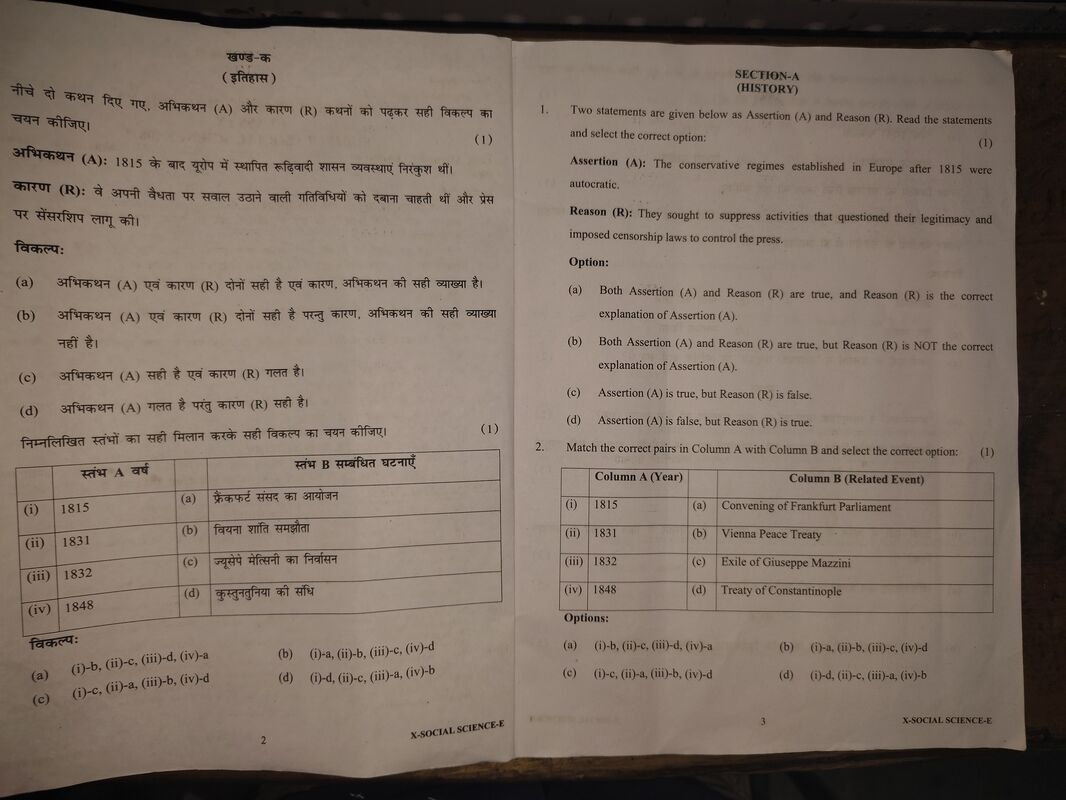
(i) Which one of the following describes a system of agriculture where a single crop is grown on a large area?
कृषि की वह कौन-सी प्रणाली है जिसमें बड़े क्षेत्र में केवल एक ही फसल उगाई जाती है?
(a) Shifting Agriculture (स्थानांतरण कृषि)
(b) Plantation Agriculture (रोपण कृषि)
(c) Horticulture (बागवानी)
(d) Intensive Agriculture (गहन कृषि)
Answer / उत्तर: (b) Plantation Agriculture (रोपण कृषि)
(ii) Which one of the following is a Rabi crop?
निम्नलिखित में से कौन-सी रबी की फसल है?
(a) Rice (चावल)
(b) Gram (चना)
(c) Millets (मोटे अनाज)
(d) Cotton (कपास)
Answer / उत्तर: (b) Gram (चना)
(iii) Which one of the following is a leguminous crop?
निम्नलिखित में से कौन-सी दलहनी फसल है?
(a) Pulses (दालें)
(b) Jowar (ज्वार)
(c) Millets (मोटे अनाज)
(d) Sesamum (तिल)
Answer / उत्तर: (a) Pulses (दालें)
(iv) Which one of the following is announced by the government in support of a crop?
सरकार द्वारा किसी फसल के समर्थन में निम्नलिखित में से किसकी घोषणा की जाती है?
(a) Maximum Support Price (अधिकतम समर्थन मूल्य)
(b) Minimum Support Price (न्यूनतम समर्थन मूल्य)
(c) Moderate Support Price (मध्यम समर्थन मूल्य)
(d) Influential Support Price (प्रभावशाली समर्थन मूल्य)
Answer / उत्तर: (b) Minimum Support Price (न्यूनतम समर्थन मूल्य)
### Q.2 Answer the following questions in about 30 words.
### निम्नलिखित प्रश्नों के उत्तर लगभग 30 शब्दों में दीजिए।
### (i) Name one important beverage crop and specify the geographical conditions required for its growth.
एक महत्वपूर्ण पेय फसल का नाम बताइए तथा उसके उत्पादन के लिए आवश्यक भौगोलिक परिस्थितियों का वर्णन कीजिए।
Answer (English): Tea
Tea is an important beverage crop of India. It requires:
* Climate: Tropical and subtropical climate.
* Temperature: Warm and frost-free climate.
* Rainfall: Frequent and well-distributed rainfall throughout the year.
* Soil: Deep, fertile and well-drained soil rich in humus.
* Labour: Abundant, cheap and skilled labour.
उत्तर (हिंदी): चाय
चाय भारत की एक महत्वपूर्ण पेय फसल है। इसके उत्पादन के लिए निम्नलिखित परिस्थितियाँ आवश्यक हैं:
* जलवायु: उष्णकटिबंधीय एवं उपोष्णकटिबंधीय जलवायु।
* तापमान: गर्म तथा पाला रहित जलवायु।
* वर्षा: पूरे वर्ष नियमित एवं पर्याप्त वर्षा।
* मिट्टी: गहरी, उपजाऊ तथा अच्छी जल निकासी वाली ह्यूमस युक्त मिट्टी।
* श्रम: सस्ते, कुशल एवं पर्याप्त श्रमिक।
### (ii) Name one staple crop of India and the regions where it is produced.
भारत की एक प्रमुख खाद्यान्न फसल का नाम बताइए तथा इसके उत्पादन वाले क्षेत्रों का उल्लेख कीजिए।
Answer (English): Wheat
Wheat is one of the most important staple food crops of India.
Major producing regions:
* Ganga-Sutlej plains in the north-western part of India.
* Punjab, Haryana, Uttar Pradesh, Bihar and Rajasthan.
* Parts of Madhya Pradesh.
उत्तर (हिंदी): गेहूँ
गेहूँ भारत की प्रमुख खाद्यान्न फसलों में से एक है।
प्रमुख उत्पादक क्षेत्र:
* उत्तर-पश्चिमी भारत के गंगा-सतलुज के मैदान।
* पंजाब, हरियाणा, उत्तर प्रदेश, बिहार और राजस्थान।
* मध्य प्रदेश के कुछ भाग।
### (iii) Enlist the various institutional reform programmes introduced by the government in the interest of farmers.
किसानों के हित में सरकार द्वारा शुरू किए गए विभिन्न संस्थागत सुधार कार्यक्रमों की सूची बनाइए।
Answer (English):
The various institutional reform programmes introduced by the government are:
* Kisan Credit Card (KCC).
* Personal Accident Insurance Scheme (PAIS).
* Crop Insurance Scheme.
* Minimum Support Price (MSP).
* Subsidies on electricity, seeds and fertilisers.
* Agricultural loans at low interest rates.
* Special weather bulletins and agricultural programmes on Radio and Television.
* Loan waiver schemes.
* Remunerative prices and government procurement of crops.
उत्तर (हिंदी):
किसानों के हित में सरकार द्वारा शुरू किए गए प्रमुख संस्थागत सुधार कार्यक्रम निम्नलिखित हैं:
* किसान क्रेडिट कार्ड योजना (KCC)।
* व्यक्तिगत दुर्घटना बीमा योजना (PAIS)।
* फसल बीमा योजना।
* न्यूनतम समर्थन मूल्य (MSP)।
* बिजली, बीज एवं उर्वरकों पर सब्सिडी।
* कम ब्याज दर पर कृषि ऋण।
* रेडियो एवं टेलीविजन पर मौसम संबंधी जानकारी और कृषि कार्यक्रम।
* ऋण माफी योजनाएँ।
* फसलों का लाभकारी मूल्य एवं सरकारी खरीद व्यवस्था।
### Q.3 Answer the following questions in about 120 words.
### निम्नलिखित प्रश्नों के उत्तर लगभग 120 शब्दों में दीजिए।
### (i) Suggest the initiative taken by the government to ensure the increase in agricultural production.
कृषि उत्पादन में वृद्धि सुनिश्चित करने के लिए सरकार द्वारा उठाए गए कदमों का सुझाव दीजिए।
Answer (English):
The government has taken several initiatives to increase agricultural production in India:
* Agricultural Research: Establishment of ICAR (Indian Council of Agricultural Research) and agricultural universities.
* Improved Seeds: Providing High Yielding Variety (HYV) seeds to farmers.
* Modern Technology: Encouraging the use of modern agricultural machines and equipment.
* Irrigation Facilities: Development of canals, tube wells and other irrigation facilities.
* Fertilisers and Pesticides: Providing chemical fertilisers, pesticides and insecticides at subsidised rates.
* Financial Assistance: Providing loans at low interest rates through banks and cooperative societies.
* Weather Forecasting: Giving priority to research and development in meteorology and weather forecasting.
* Rural Infrastructure: Improving rural roads, electricity, storage and transportation facilities.
* Crop Insurance: Providing insurance against crop failure.
These measures help farmers increase productivity and improve their economic conditions.
उत्तर (हिंदी):
भारत में कृषि उत्पादन बढ़ाने के लिए सरकार ने अनेक महत्वपूर्ण कदम उठाए हैं:
* कृषि अनुसंधान: भारतीय कृषि अनुसंधान परिषद (ICAR) तथा कृषि विश्वविद्यालयों की स्थापना।
* उन्नत बीज: किसानों को अधिक उपज देने वाले HYV बीज उपलब्ध कराना।
* आधुनिक तकनीक: आधुनिक कृषि मशीनों एवं उपकरणों के प्रयोग को प्रोत्साहन देना।
* सिंचाई सुविधाएँ: नहरों, नलकूपों एवं अन्य सिंचाई सुविधाओं का विकास करना।
* उर्वरक एवं कीटनाशक: रासायनिक उर्वरकों, कीटनाशकों एवं कीट नियंत्रक दवाओं पर सब्सिडी देना।
* वित्तीय सहायता: बैंकों एवं सहकारी समितियों के माध्यम से कम ब्याज पर ऋण उपलब्ध कराना।
* मौसम पूर्वानुमान: मौसम विज्ञान एवं मौसम पूर्वानुमान के क्षेत्र में अनुसंधान को प्राथमिकता देना।
* ग्रामीण आधारभूत संरचना: ग्रामीण सड़कों, बिजली, भंडारण एवं परिवहन सुविधाओं में सुधार करना।
* फसल बीमा: फसल खराब होने की स्थिति में किसानों को बीमा सुरक्षा प्रदान करना।
इन सभी उपायों से कृषि उत्पादकता बढ़ती है तथा किसानों की आर्थिक स्थिति में सुधार होता है।
### (ii) Describe the geographical conditions required for the growth of rice.
चावल की खेती के लिए आवश्यक भौगोलिक परिस्थितियों का वर्णन कीजिए।
Answer (English):
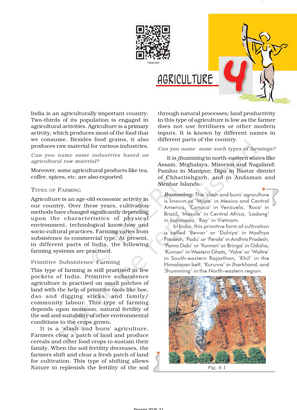
Rice is the main staple food crop of a large part of India. It requires the following geographical conditions:
* Temperature: Rice requires a high temperature, preferably above 25°C.
* Rainfall: It requires high rainfall, generally above 100 cm annually. In areas with less rainfall, irrigation is necessary.
* Soil: Clayey and heavy loamy soils are suitable because they can retain water for a long time.
* Relief: Low-lying plains and delta regions are ideal for rice cultivation because water can remain standing in the fields.
* Labour: Rice cultivation requires abundant and skilled labour for field preparation, transplantation and harvesting.
Rice is mainly grown in the northern and north-eastern plains, coastal areas and delta regions of India.
उत्तर (हिंदी):
चावल भारत की एक प्रमुख खाद्यान्न फसल है। इसकी खेती के लिए निम्नलिखित भौगोलिक परिस्थितियाँ आवश्यक हैं:
* तापमान: चावल की खेती के लिए 25°C से अधिक तापमान उपयुक्त होता है।
* वर्षा: इसके लिए सामान्यतः 100 सेमी से अधिक वार्षिक वर्षा की आवश्यकता होती है। कम वर्षा वाले क्षेत्रों में सिंचाई आवश्यक है।
* मिट्टी: भारी दोमट एवं चिकनी मिट्टी चावल की खेती के लिए उपयुक्त होती है, क्योंकि इसमें लंबे समय तक पानी रुका रह सकता है।
* स्थलाकृति: निचले मैदान एवं डेल्टा क्षेत्र चावल की खेती के लिए अच्छे होते हैं, क्योंकि इनमें खेतों में पानी जमा रह सकता है।
* श्रम: खेत तैयार करने, पौधों का रोपण करने तथा फसल काटने के लिए पर्याप्त एवं कुशल श्रमिकों की आवश्यकता होती है।
भारत में चावल मुख्य रूप से उत्तरी एवं उत्तर-पूर्वी मैदानों, तटीय क्षेत्रों तथा डेल्टा क्षेत्रों में उगाया जाता है।
### Important Revision Points (महत्वपूर्ण पुनरावृत्ति)
| Topic / विषय | Important Answer / उत्तर |
| ---------------------- | --------------------------------------- |
| Plantation Agriculture | Single crop on a large area |
| Rabi Crop | Gram (चना) |
| Leguminous Crop | Pulses (दालें) |
| MSP | Minimum Support Price |
| Beverage Crop | Tea (चाय) |
| Staple Crop | Wheat (गेहूँ) |
| Rice Temperature | Above 25°C |
| Rice Rainfall | Generally above 100 cm |
| ICAR | Indian Council of Agricultural Research |
| KCC | Kisan Credit Card |
Course Curriculum
No Curriculum Added Yet
Course content will be added soon.
This course is offered directly by the platform and is not tied to a specific instructor.
0
0 Reviews
No Reviews Yet
Be the first to review this course.