-
Mayur Vihar 3 Delhi, 110096 India
Free Course
Class 10 Geography Chapter 6 Manufacturing Industries Important Questions and Asnwers in English and Hindi
Class 10 Geography Chapter 6 Manufacturing Industries Important Questions and Asnwers in English and Hindi
Course Overview
Class 10 Geography Chapter 6 Manufacturing Industries Important Questions and Asnwers in English and Hindi
### Class 10 Geography – Chapter 6: Manufacturing Industries
### कक्षा 10 भूगोल – अध्याय 6: विनिर्माण उद्योग
CBSE / NCERT | Important Questions & Answers | English + हिंदी | 1, 3 and 5 Marks
### Part A: Very Short Answer Questions (1 Mark)
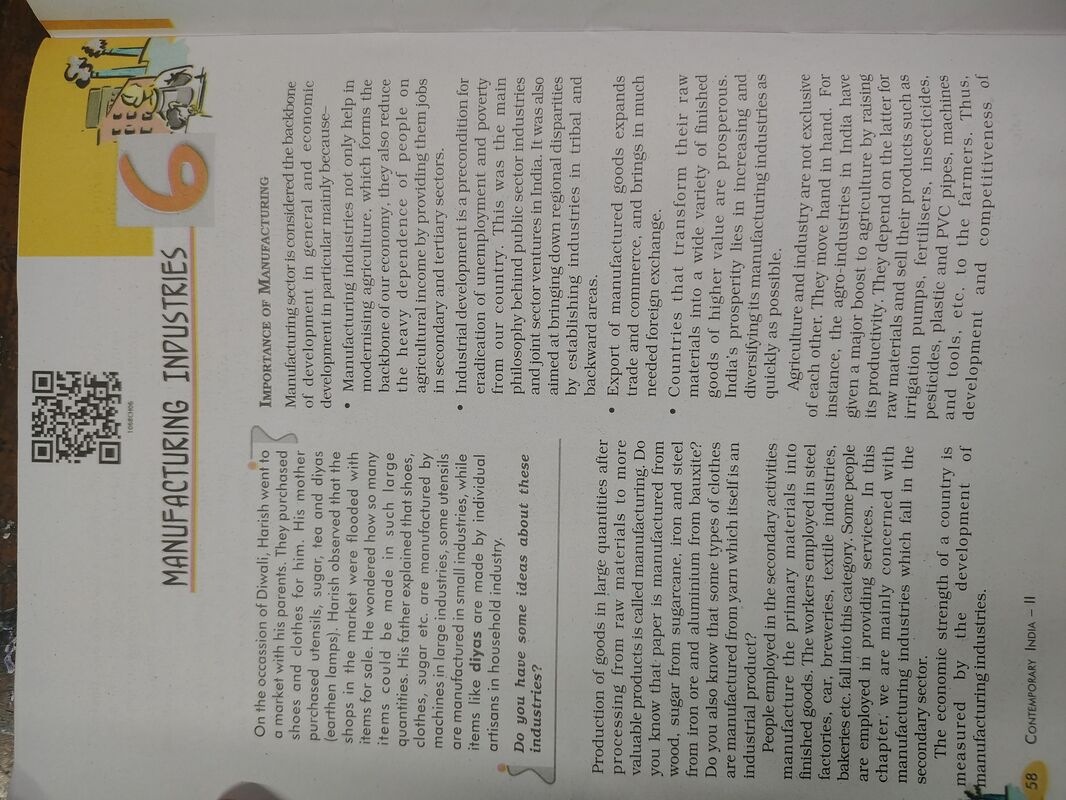
### Q1. What is manufacturing? / विनिर्माण क्या है?
English: Manufacturing is the process of converting raw materials into more valuable finished products.
हिंदी: कच्चे माल को अधिक मूल्यवान तैयार उत्पादों में बदलने की प्रक्रिया को विनिर्माण कहते हैं।
### Q2. What is an agro-based industry? / कृषि आधारित उद्योग क्या है?
English: An industry that uses agricultural products as raw materials is called an agro-based industry. Example: cotton textile industry.
हिंदी: जो उद्योग कृषि उत्पादों को कच्चे माल के रूप में उपयोग करता है, उसे कृषि आधारित उद्योग कहते हैं। उदाहरण: सूती वस्त्र उद्योग।
### Q3. What is a mineral-based industry? / खनिज आधारित उद्योग क्या है?
English: An industry that uses minerals as its main raw materials is called a mineral-based industry. Example: iron and steel industry.
हिंदी: जो उद्योग खनिजों को मुख्य कच्चे माल के रूप में उपयोग करता है, उसे खनिज आधारित उद्योग कहते हैं। उदाहरण: लोहा और इस्पात उद्योग।
### Q4. What is a basic industry? / आधारभूत उद्योग क्या है?
English: An industry that supplies its products or raw materials to other industries is called a basic industry. Example: iron and steel industry.
हिंदी: जो उद्योग अन्य उद्योगों को अपने उत्पाद या कच्चा माल उपलब्ध कराता है, उसे आधारभूत उद्योग कहते हैं। उदाहरण: लोहा और इस्पात उद्योग।
### Q5. What is a consumer industry? / उपभोक्ता उद्योग क्या है?
English: An industry that produces goods directly for consumers is called a consumer industry. Example: sugar and toothpaste industries.
हिंदी: जो उद्योग सीधे उपभोक्ताओं के उपयोग के लिए वस्तुएँ बनाता है, उसे उपभोक्ता उद्योग कहते हैं। उदाहरण: चीनी और टूथपेस्ट उद्योग।
### Q6. Name two important industrial regions of India. / भारत के दो प्रमुख औद्योगिक क्षेत्रों के नाम बताइए।
English: Mumbai–Pune industrial region and the Hugli industrial region.
हिंदी: मुंबई–पुणे औद्योगिक क्षेत्र और हुगली औद्योगिक क्षेत्र।
### Part B: Short Answer Questions (3 Marks)
### Q7. Why is manufacturing important for the economic development of India? / भारत के आर्थिक विकास में विनिर्माण क्यों महत्त्वपूर्ण है?
English:
* It creates employment opportunities.
* It adds value to raw materials and increases national income.
* It promotes exports, trade and modernisation of agriculture.
हिंदी:
* यह रोजगार के अवसर पैदा करता है।
* यह कच्चे माल का मूल्य बढ़ाता है और राष्ट्रीय आय में योगदान देता है।
* यह निर्यात, व्यापार और कृषि के आधुनिकीकरण को बढ़ावा देता है।
### Q8. Explain any three factors affecting the location of industries. / उद्योगों की अवस्थिति को प्रभावित करने वाले तीन कारक बताइए।
English:
* Availability of raw materials.
* Availability of labour and capital.
* Availability of power, transport and markets.
हिंदी:
* कच्चे माल की उपलब्धता।
* श्रमिकों और पूँजी की उपलब्धता।
* बिजली, परिवहन और बाजार की सुविधा।
### Q9. Differentiate between agro-based and mineral-based industries. / कृषि आधारित और खनिज आधारित उद्योगों में अंतर बताइए।
| Agro-based industries / कृषि आधारित उद्योग | Mineral-based industries / खनिज आधारित उद्योग |
| ------------------------------------------------------------------------------ | ---------------------------------------------------------- |
| Use agricultural products as raw materials. / कृषि उत्पादों का उपयोग करते हैं। | Use minerals as raw materials. / खनिजों का उपयोग करते हैं। |
| Example: cotton textiles. / उदाहरण: सूती वस्त्र। | Example: iron and steel. / उदाहरण: लोहा और इस्पात। |
| Depend on agricultural production. / कृषि उत्पादन पर निर्भर। | Depend on mineral resources. / खनिज संसाधनों पर निर्भर। |
### Q10. Why is the cotton textile industry important in India? / भारत में सूती वस्त्र उद्योग क्यों महत्त्वपूर्ण है?
English:
* It provides employment to a large number of people.
* It links agriculture with manufacturing.
* It contributes to exports and the national economy.
हिंदी:
* यह बड़ी संख्या में लोगों को रोजगार देता है।
* यह कृषि और विनिर्माण को जोड़ता है।
* यह निर्यात और राष्ट्रीय अर्थव्यवस्था में योगदान देता है।
### Q11. Why is the jute industry concentrated along the Hugli River? / जूट उद्योग हुगली नदी के किनारे केंद्रित क्यों है?
English:
* The region is close to jute-producing areas.
* Abundant water is available for processing jute.
* Transport, labour, port facilities and other industrial infrastructure are available.
हिंदी:
* यह क्षेत्र जूट उत्पादक क्षेत्रों के निकट है।
* जूट के प्रसंस्करण के लिए पर्याप्त पानी उपलब्ध है।
* यहाँ परिवहन, श्रमिक, बंदरगाह और औद्योगिक सुविधाएँ उपलब्ध हैं।
### Q12. Mention three problems faced by the cotton textile industry. / सूती वस्त्र उद्योग की तीन समस्याएँ बताइए।
English:
* Irregular supply and variable quality of raw cotton.
* Outdated machinery in some mills.
* Competition in domestic and international markets.
हिंदी:
* कच्ची कपास की अनियमित आपूर्ति और गुणवत्ता में अंतर।
* कुछ मिलों में पुरानी मशीनों का उपयोग।
* घरेलू और अंतरराष्ट्रीय बाजारों में प्रतिस्पर्धा।
### Part C: Long Answer Questions (5 Marks)
### Q13. Explain the importance of the manufacturing sector in India. / भारत में विनिर्माण क्षेत्र का महत्त्व समझाइए।
English:
* Manufacturing helps modernise agriculture by providing machinery and equipment.
* It creates employment and reduces excessive dependence on agriculture.
* It increases the value of raw materials.
* It promotes international trade and exports.
* It contributes to national income and economic development.
हिंदी:
* विनिर्माण मशीनें और उपकरण उपलब्ध कराकर कृषि का आधुनिकीकरण करता है।
* यह रोजगार पैदा करता है और कृषि पर अत्यधिक निर्भरता कम करता है।
* यह कच्चे माल का मूल्य बढ़ाता है।
* यह अंतरराष्ट्रीय व्यापार और निर्यात को बढ़ावा देता है।
* यह राष्ट्रीय आय और आर्थिक विकास में योगदान देता है।
### Q14. Explain the problems of the iron and steel industry in India. / भारत में लोहा और इस्पात उद्योग की समस्याओं को समझाइए।
English:
* High production costs and comparatively expensive electricity in some regions.
* Limited availability of high-quality coking coal.
* Lower productivity in some older plants.
* Irregular supply of raw materials in certain areas.
* Competition and the need for technological modernisation.
हिंदी:
* उत्पादन लागत अधिक होना और कुछ क्षेत्रों में बिजली महँगी होना।
* उच्च गुणवत्ता वाले कोकिंग कोयले की सीमित उपलब्धता।
* कुछ पुराने संयंत्रों में कम उत्पादकता।
* कुछ क्षेत्रों में कच्चे माल की अनियमित आपूर्ति।
* प्रतिस्पर्धा और आधुनिक तकनीक की आवश्यकता।
### Q15. Explain the causes of industrial pollution. / औद्योगिक प्रदूषण के कारणों की व्याख्या कीजिए।
English:
* Air pollution: Smoke and harmful gases released by factories.
* Water pollution: Discharge of untreated industrial waste into water bodies.
* Thermal pollution: Release of heated water from industrial plants.
* Noise pollution: Loud sounds produced by machinery and generators.
* Land pollution: Improper disposal of industrial solid waste.
हिंदी:
* वायु प्रदूषण: कारखानों से निकलने वाला धुआँ और हानिकारक गैसें।
* जल प्रदूषण: बिना उपचार के औद्योगिक अपशिष्ट को जल स्रोतों में छोड़ना।
* तापीय प्रदूषण: औद्योगिक संयंत्रों से गर्म पानी का जल स्रोतों में छोड़ा जाना।
* ध्वनि प्रदूषण: मशीनों और जनरेटरों से उत्पन्न तेज आवाज।
* भूमि प्रदूषण: औद्योगिक ठोस कचरे का अनुचित निपटान।
### Q16. Suggest measures to control industrial pollution. / औद्योगिक प्रदूषण को नियंत्रित करने के उपाय बताइए।
English:
* Treat industrial wastewater before discharging it.
* Install filters and devices to control harmful emissions.
* Recycle and reuse industrial waste.
* Use cleaner fuels and energy-efficient technologies.
* Develop green belts around industrial areas and enforce environmental standards.
हिंदी:
* औद्योगिक अपशिष्ट जल को छोड़ने से पहले उसका उपचार करें।
* हानिकारक उत्सर्जन को नियंत्रित करने के लिए फिल्टर और उपकरण लगाएँ।
* औद्योगिक कचरे का पुनर्चक्रण और पुनः उपयोग करें।
* स्वच्छ ईंधन और ऊर्जा-कुशल तकनीकों का उपयोग करें।
* औद्योगिक क्षेत्रों के आसपास हरित पट्टियाँ विकसित करें और पर्यावरण मानकों का पालन सुनिश्चित करें।
### Q17. Why is the sugar industry shifting towards southern and western India? / चीनी उद्योग दक्षिणी और पश्चिमी भारत की ओर क्यों स्थानांतरित हो रहा है?
English:
* The tropical climate is favourable for sugarcane cultivation.
* Sugarcane in these regions often has a higher sucrose content.
* The crushing season can be longer.
* Cooperative sugar mills have developed in states such as Maharashtra.
* Improved irrigation and management have supported the industry.
हिंदी:
* यहाँ की उष्णकटिबंधीय जलवायु गन्ने की खेती के लिए अनुकूल है।
* इन क्षेत्रों में गन्ने में प्रायः सुक्रोज की मात्रा अधिक होती है।
* यहाँ गन्ने की पेराई का मौसम लंबा हो सकता है।
* महाराष्ट्र जैसे राज्यों में सहकारी चीनी मिलों का विकास हुआ है।
* बेहतर सिंचाई और प्रबंधन ने उद्योग को बढ़ावा दिया है।
### Part D: Important MCQs (Hindi + English)
### Practice Test / अभ्यास परीक्षा
0/6 answered
1. Which industry is known as a basic industry? / किस उद्योग को आधारभूत उद्योग कहा जाता है?
A. Sugar / चीनी
B. Iron and steel / लोहा और इस्पात
C. Paper / कागज
D. Textiles / वस्त्र
2. Which industry uses agricultural raw materials? / कौन-सा उद्योग कृषि कच्चे माल का उपयोग करता है?
A. Cotton textile / सूती वस्त्र
B. Cement / सीमेंट
C. Iron and steel / लोहा और इस्पात
D. Aluminium / एल्युमिनियम
3. Which industrial region is associated with the Hugli River? / हुगली नदी से कौन-सा औद्योगिक क्षेत्र संबंधित है?
A. Mumbai–Pune / मुंबई–पुणे
B. Hugli region / हुगली क्षेत्र
C. Chota Nagpur / छोटा नागपुर
D. Bengaluru–Tamil Nadu / बेंगलुरु–तमिलनाडु
4. Which of these is a cause of water pollution? / जल प्रदूषण का कारण कौन-सा है?
A. Untreated industrial waste / बिना उपचार का औद्योगिक अपशिष्ट
B. Solar panels / सौर पैनल
C. Tree planting / वृक्षारोपण
D. Rainwater harvesting / वर्षा जल संचयन
5. Which raw material is essential for the iron and steel industry? / लोहा-इस्पात उद्योग के लिए कौन-सा कच्चा माल आवश्यक है?
A. Cotton / कपास
B. Iron ore / लौह अयस्क
C. Jute / जूट
D. Sugarcane / गन्ना
6. Which industry produces cement? / सीमेंट का उत्पादन कौन-सा उद्योग करता है?
A. Agro-based / कृषि आधारित
B. Mineral-based / खनिज आधारित
C. Forest-based only / केवल वन आधारित
D. Marine-based / समुद्र आधारित
Reset Test / दोबारा प्रयास करें
### Quick Revision – परीक्षा से पहले याद करें
| Topic / विषय | Key point / मुख्य बिंदु |
| --------------------------------------- | -------------------------------------------------------------------------- |
| Manufacturing / विनिर्माण | Raw materials into finished goods / कच्चे माल से तैयार वस्तुएँ |
| Basic industry / आधारभूत उद्योग | Iron and steel / लोहा और इस्पात |
| Agro-based / कृषि आधारित | Cotton, jute, sugar / कपास, जूट, चीनी |
| Mineral-based / खनिज आधारित | Iron and steel, cement / लोहा-इस्पात, सीमेंट |
| Industrial pollution / औद्योगिक प्रदूषण | Air, water, thermal, noise / वायु, जल, तापीय, ध्वनि |
| Pollution control / प्रदूषण नियंत्रण | Treatment, recycling, cleaner technology / उपचार, पुनर्चक्रण, स्वच्छ तकनीक |
Course Curriculum
No Curriculum Added Yet
Course content will be added soon.
This course is offered directly by the platform and is not tied to a specific instructor.
0
0 Reviews
No Reviews Yet
Be the first to review this course.