-
Mayur Vihar 3 Delhi, 110096 India
Free Course
Class 10 History – PYQ-Based Questions
Class 10 History India and the Contemporary World II PYQ (English & Hindi Med)

Course Overview
Class 10 History – PYQ-Based Questions
कक्षा 10 इतिहास – PYQ आधारित प्रश्न
MCQs – Questions 1–10
1. Who among the following founded the secret society “Young Italy”?
निम्नलिखित में से “यंग इटली” गुप्त संस्था की स्थापना किसने की थी?
A. Giuseppe Mazzini
B. Otto von Bismarck
C. Giuseppe Garibaldi
D. Victor Emmanuel II
Answer / उत्तर: A. Giuseppe Mazzini (ज्यूसेपे मैजिनी)
Explanation / व्याख्या: Mazzini founded Young Italy in 1831 to promote the idea of a united Italian republic.
मैजिनी ने 1831 में एकीकृत इटली के विचार को बढ़ावा देने के लिए यंग इटली की स्थापना की।
2. The Civil Disobedience Movement in India was launched in which year?
भारत में सविनय अवज्ञा आंदोलन किस वर्ष शुरू किया गया था?
A. 1919
B. 1922
C. 1930
D. 1942
Answer / उत्तर: C. 1930
Explanation / व्याख्या: Gandhi launched the Civil Disobedience Movement in 1930 with the Salt March from Sabarmati Ashram to Dandi.
गांधीजी ने 1930 में साबरमती आश्रम से दांडी तक नमक यात्रा के साथ सविनय अवज्ञा आंदोलन शुरू किया।
3. Which treaty recognised Greece as an independent nation?
किस संधि ने यूनान को एक स्वतंत्र राष्ट्र के रूप में मान्यता दी?
A. Treaty of Vienna
B. Treaty of Constantinople
C. Treaty of Versailles
D. Treaty of Frankfurt
Answer / उत्तर: B. Treaty of Constantinople (कुस्तुंतुनिया की संधि)
Explanation / व्याख्या: The Treaty of Constantinople of 1832 recognised Greece as an independent nation.
1832 की कुस्तुंतुनिया की संधि ने यूनान को एक स्वतंत्र राष्ट्र के रूप में मान्यता दी।
4. Which crop became an important industrial crop in India during the nineteenth century?
उन्नीसवीं शताब्दी में भारत में कौन-सी फसल एक महत्वपूर्ण औद्योगिक फसल बन गई थी?
A. Indigo
B. Wheat
C. Rice
D. Maize
Answer / उत्तर: A. Indigo (नील)
Explanation / व्याख्या: Indigo was widely cultivated in India to meet the growing demand for blue dye in European textile industries.
यूरोपीय वस्त्र उद्योगों में नीले रंग की बढ़ती माँग के कारण भारत में नील की खेती बड़े पैमाने पर की गई।
5. Who designed the Swaraj flag during the Swadeshi movement?
स्वदेशी आंदोलन के दौरान स्वराज ध्वज का डिजाइन किसने तैयार किया था?
A. Abanindranath Tagore
B. Rabindranath Tagore
C. Mahatma Gandhi
D. Bankim Chandra Chattopadhyay
Answer / उत्तर: C. Mahatma Gandhi (महात्मा गांधी)
Explanation / व्याख्या: The Swaraj flag designed by Gandhi had the spinning wheel or charkha at its centre.
गांधीजी द्वारा डिजाइन किए गए स्वराज ध्वज के केंद्र में चरखा था।
6. What was the main reason for the invention of the printing press in Europe?
यूरोप में प्रिंटिंग प्रेस के आविष्कार का प्रमुख प्रभाव क्या था?
A. Books became more expensive
B. Books could be produced quickly and cheaply
C. Reading declined
D. Manuscripts disappeared immediately
Answer / उत्तर: B. Books could be produced quickly and cheaply.
Explanation / व्याख्या: Printing made books available in large numbers at relatively lower costs and helped spread knowledge and ideas.
मुद्रण के कारण पुस्तकें बड़ी संख्या में और अपेक्षाकृत कम कीमत पर उपलब्ध होने लगीं तथा ज्ञान और विचारों का प्रसार हुआ।
7. Who invented the printing press in Europe?
यूरोप में प्रिंटिंग प्रेस का आविष्कार किसने किया था?
A. James Watt
B. Johannes Gutenberg
C. Marco Polo
D. Martin Luther
Answer / उत्तर: B. Johannes Gutenberg (जोहान्स गुटेनबर्ग)
Explanation / व्याख्या: Gutenberg developed the first known printing press with movable metal types in Europe around the 1430s–1440s.
गुटेनबर्ग ने लगभग 1430–1440 के दशक में यूरोप में चल प्रकार वाली धातु की मुद्रण मशीन विकसित की।
8. Which event marked the beginning of the Great Depression?
महामंदी की शुरुआत किस घटना से जुड़ी थी?
A. First World War
B. Wall Street Crash of 1929
C. Russian Revolution
D. Second World War
Answer / उत्तर: B. Wall Street Crash of 1929
Explanation / व्याख्या: The Wall Street Crash of October 1929 was a major event that triggered a severe worldwide economic depression.
अक्टूबर 1929 का वॉल स्ट्रीट संकट विश्वव्यापी गंभीर आर्थिक मंदी का एक प्रमुख कारण बना।
9. Which Indian industrialist set up the first cotton mill in Bombay in 1854?
1854 में बंबई में पहली कपास मिल स्थापित करने वाले भारतीय उद्योगपति कौन थे?
A. J.N. Tata
B. Dinshaw Petit
C. Dwarkanath Tagore
D. Seth Hukumchand
Answer / उत्तर: B. Dinshaw Petit (दीनशॉ पेटिट)
Explanation / व्याख्या: Dinshaw Petit established the first successful cotton mill in Bombay in 1854.
दीनशॉ पेटिट ने 1854 में बंबई में पहली सफल कपास मिल स्थापित की।
10. Which of the following was an important feature of the Non-Cooperation Movement?
निम्नलिखित में से कौन असहयोग आंदोलन की प्रमुख विशेषता थी?
A. Participation in British institutions
B. Boycott of British institutions and goods
C. Support for colonial rule
D. Expansion of British trade
Answer / उत्तर: B. Boycott of British institutions and goods
Explanation / व्याख्या: The Non-Cooperation Movement encouraged people to boycott British educational institutions, courts, foreign cloth and other colonial institutions.
असहयोग आंदोलन में लोगों से ब्रिटिश शैक्षणिक संस्थानों, अदालतों, विदेशी कपड़ों और अन्य औपनिवेशिक संस्थाओं का बहिष्कार करने का आह्वान किया गया।
Short Questions – Questions 1–10
लघु उत्तरीय प्रश्न
1. What was the main aim of the Treaty of Vienna of 1815?
1815 की वियना संधि का मुख्य उद्देश्य क्या था?
Answer / उत्तर:
The Treaty of Vienna aimed to restore the conservative order in Europe after the defeat of Napoleon and to redraw the political boundaries of Europe.
वियना संधि का उद्देश्य नेपोलियन की हार के बाद यूरोप में रूढ़िवादी व्यवस्था को पुनः स्थापित करना और यूरोप की राजनीतिक सीमाओं का पुनर्निर्धारण करना था।
2. What did liberalism mean in nineteenth-century Europe?
उन्नीसवीं शताब्दी के यूरोप में उदारवाद का क्या अर्थ था?
Answer / उत्तर:
Liberalism stood for freedom for the individual, equality before law, representative government and freedom of markets. However, initially it did not support universal adult franchise.
उदारवाद व्यक्ति की स्वतंत्रता, कानून के समक्ष समानता, प्रतिनिधि सरकार और बाजार की स्वतंत्रता का समर्थन करता था। हालांकि शुरुआत में यह सार्वभौमिक वयस्क मताधिकार के पक्ष में नहीं था।
3. Why did Mahatma Gandhi launch the Non-Cooperation Movement?
महात्मा गांधी ने असहयोग आंदोलन क्यों शुरू किया?
Answer / उत्तर:
Gandhi launched the movement to oppose colonial rule and injustice, particularly after the Jallianwala Bagh massacre and the Khilafat issue.
गांधीजी ने औपनिवेशिक शासन और उसके अन्याय का विरोध करने के लिए आंदोलन शुरू किया। जलियाँवाला बाग हत्याकांड और खिलाफत मुद्दे ने भी इसमें महत्वपूर्ण भूमिका निभाई।
4. What was the Rowlatt Act?
रॉलेट एक्ट क्या था?
Answer / उत्तर:
The Rowlatt Act of 1919 gave the British government extensive powers to repress political activities and imprison people without trial.
1919 के रॉलेट एक्ट ने ब्रिटिश सरकार को राजनीतिक गतिविधियों को दबाने और लोगों को बिना मुकदमे के गिरफ्तार करने की व्यापक शक्तियाँ दीं।
5. Why was the Salt March an important event?
नमक यात्रा एक महत्वपूर्ण घटना क्यों थी?
Answer / उत्तर:
The Salt March challenged the British monopoly over salt and became a powerful symbol of resistance against colonial rule.
नमक यात्रा ने नमक पर ब्रिटिश सरकार के एकाधिकार को चुनौती दी और औपनिवेशिक शासन के विरुद्ध प्रतिरोध का शक्तिशाली प्रतीक बन गई।
6. What is meant by indentured labour?
गिरमिटिया मजदूर से क्या तात्पर्य है?
Answer / उत्तर:
Indentured labourers were workers employed under contracts for a fixed period, often sent from India to plantations and other colonies under difficult conditions.
गिरमिटिया मजदूर वे श्रमिक थे जिन्हें निश्चित अवधि के अनुबंध पर काम करने के लिए नियुक्त किया जाता था। भारत से अनेक मजदूरों को कठिन परिस्थितियों में बागानों और अन्य उपनिवेशों में भेजा गया।
7. Why did Indian weavers face difficulties under British rule?
ब्रिटिश शासन के दौरान भारतीय बुनकरों को किन कठिनाइयों का सामना करना पड़ा?
Answer / उत्तर:
Indian weavers faced competition from cheap machine-made British cloth, restrictions on Indian textiles and difficulties in obtaining raw materials.
भारतीय बुनकरों को सस्ते मशीन निर्मित ब्रिटिश कपड़ों से प्रतिस्पर्धा, भारतीय वस्त्रों पर प्रतिबंध और कच्चे माल की उपलब्धता में कठिनाइयों का सामना करना पड़ा।
8. What was the role of print in spreading new ideas?
नए विचारों के प्रसार में मुद्रण की क्या भूमिका थी?
Answer / उत्तर:
Print made books, newspapers and pamphlets widely available. It helped spread religious, political and social ideas among larger sections of society.
मुद्रण ने पुस्तकों, समाचार-पत्रों और पर्चों को व्यापक रूप से उपलब्ध कराया। इससे धार्मिक, राजनीतिक और सामाजिक विचार समाज के बड़े वर्गों तक पहुँचे।
9. What was the impact of the Great Depression on Indian peasants?
महामंदी का भारतीय किसानों पर क्या प्रभाव पड़ा?
Answer / उत्तर:
Agricultural prices fell sharply, reducing farmers' incomes. Many peasants found it difficult to pay revenue and repay debts.
कृषि उत्पादों की कीमतों में भारी गिरावट आई, जिससे किसानों की आय कम हो गई। अनेक किसानों के लिए लगान चुकाना और कर्ज वापस करना कठिन हो गया।
10. What was the importance of the Swadeshi movement?
स्वदेशी आंदोलन का क्या महत्व था?
Answer / उत्तर:
The Swadeshi movement promoted the use of Indian-made goods and encouraged the boycott of foreign goods. It strengthened economic nationalism.
स्वदेशी आंदोलन ने भारतीय वस्तुओं के उपयोग और विदेशी वस्तुओं के बहिष्कार को बढ़ावा दिया। इससे आर्थिक राष्ट्रवाद को मजबूती मिली।
Long Questions – Questions 1–10
दीर्घ उत्तरीय प्रश्न
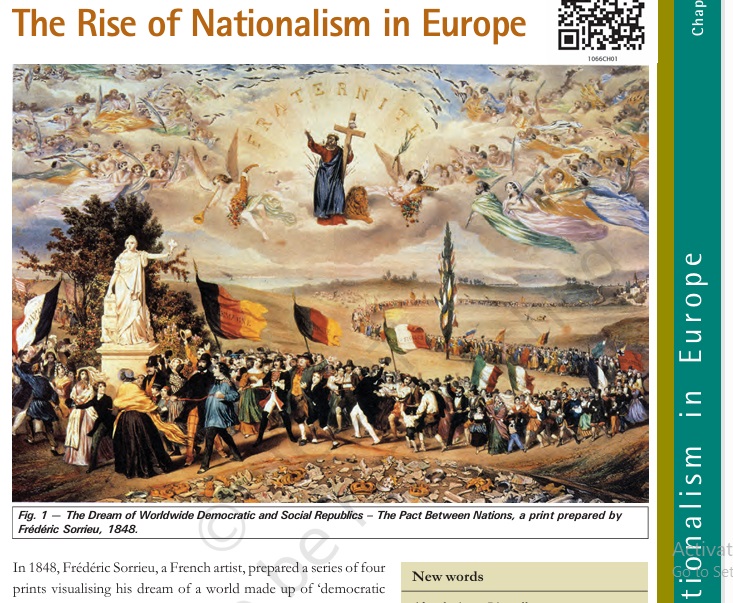
1. Explain the process of German unification.
जर्मनी के एकीकरण की प्रक्रिया समझाइए।
Answer / उत्तर:
The German states were united under the leadership of Prussia. Otto von Bismarck, the Chief Minister of Prussia, used diplomacy and wars to achieve unification. Prussia fought wars against Denmark, Austria and France. The victory over France in 1870–71 strengthened German nationalism. In January 1871, William I of Prussia was proclaimed German Emperor at Versailles. Thus, Germany was unified under Prussian leadership.
जर्मन राज्यों का एकीकरण प्रशा के नेतृत्व में हुआ। प्रशा के मुख्यमंत्री ओटो वॉन बिस्मार्क ने कूटनीति और युद्धों का प्रयोग करके एकीकरण की प्रक्रिया को आगे बढ़ाया। प्रशा ने डेनमार्क, ऑस्ट्रिया और फ्रांस के विरुद्ध युद्ध किए। 1870–71 में फ्रांस पर विजय ने जर्मन राष्ट्रवाद को मजबूत किया। जनवरी 1871 में वर्साय में प्रशा के राजा विलियम प्रथम को जर्मन सम्राट घोषित किया गया। इस प्रकार प्रशा के नेतृत्व में जर्मनी का एकीकरण हुआ।
2. Explain the role of Mahatma Gandhi in the Indian National Movement.
भारतीय राष्ट्रीय आंदोलन में महात्मा गांधी की भूमिका समझाइए।
Answer / उत्तर:
Mahatma Gandhi transformed Indian nationalism into a mass movement. He used the methods of satyagraha and non-violence. He led important movements such as the Non-Cooperation Movement, Civil Disobedience Movement and Quit India Movement. He also worked against social discrimination and encouraged the use of khadi and the boycott of foreign goods. His methods brought peasants, workers, women and other social groups into the national movement.
महात्मा गांधी ने भारतीय राष्ट्रवाद को जन आंदोलन का रूप देने में महत्वपूर्ण भूमिका निभाई। उन्होंने सत्याग्रह और अहिंसा के तरीकों का प्रयोग किया। उन्होंने असहयोग आंदोलन, सविनय अवज्ञा आंदोलन और भारत छोड़ो आंदोलन जैसे महत्वपूर्ण आंदोलनों का नेतृत्व किया। उन्होंने सामाजिक भेदभाव के विरुद्ध भी कार्य किया तथा खादी के उपयोग और विदेशी वस्तुओं के बहिष्कार को प्रोत्साहित किया। उनके आंदोलनों में किसान, मजदूर, महिलाएँ और अन्य सामाजिक वर्ग बड़ी संख्या में शामिल हुए।
3. Describe the causes of the Non-Cooperation Movement.
असहयोग आंदोलन के कारणों का वर्णन कीजिए।
Answer / उत्तर:
The movement developed because of several factors. The First World War created economic hardship. The Rowlatt Act generated widespread anger because it permitted detention without trial. The Jallianwala Bagh massacre further increased resentment against British rule. Gandhi also supported the Khilafat cause and sought to unite Hindus and Muslims. These developments led to the launch of the Non-Cooperation Movement in 1920.
इस आंदोलन के पीछे कई कारण थे। प्रथम विश्व युद्ध के कारण आर्थिक कठिनाइयाँ बढ़ीं। रॉलेट एक्ट के कारण व्यापक असंतोष उत्पन्न हुआ क्योंकि इसने बिना मुकदमे के गिरफ्तारी की अनुमति दी। जलियाँवाला बाग हत्याकांड ने ब्रिटिश शासन के प्रति आक्रोश को और बढ़ा दिया। गांधीजी ने खिलाफत मुद्दे का भी समर्थन किया और हिंदू-मुस्लिम एकता को मजबूत करने का प्रयास किया। इन परिस्थितियों के कारण 1920 में असहयोग आंदोलन शुरू किया गया।
4. Explain the causes and effects of the Great Depression.
महामंदी के कारणों और प्रभावों की व्याख्या कीजिए।
Answer / उत्तर:
The Great Depression began in the late 1920s and became a worldwide economic crisis. Overproduction, falling agricultural prices, weak demand and the Wall Street Crash of 1929 contributed to the crisis. Banks and businesses failed, unemployment increased and international trade declined. In India, agricultural prices fell sharply. Peasants suffered because their income declined while they still had to pay revenue and repay debts.
महामंदी 1920 के दशक के अंत में शुरू हुई और विश्वव्यापी आर्थिक संकट बन गई। अत्यधिक उत्पादन, कृषि उत्पादों की गिरती कीमतें, कमजोर माँग और 1929 का वॉल स्ट्रीट संकट इसके प्रमुख कारणों में थे। बैंकों और व्यवसायों का पतन हुआ, बेरोजगारी बढ़ी और अंतरराष्ट्रीय व्यापार में गिरावट आई। भारत में कृषि उत्पादों की कीमतों में भारी गिरावट आई। किसानों की आय कम हो गई, जबकि उन्हें लगान और कर्ज चुकाना जारी रखना पड़ा।
5. Explain the importance of the printing press in the modern world.
आधुनिक विश्व में प्रिंटिंग प्रेस के महत्व की व्याख्या कीजिए।
Answer / उत्तर:
The printing press revolutionised the production and circulation of knowledge. Books could be produced more quickly and cheaply. It increased literacy and allowed new religious, political and scientific ideas to spread. Newspapers and pamphlets created public debates. Print also helped reformers challenge social practices and enabled nationalist ideas to reach wider audiences.
प्रिंटिंग प्रेस ने ज्ञान के उत्पादन और प्रसार में क्रांतिकारी परिवर्तन किया। पुस्तकों का उत्पादन अधिक तेजी और कम लागत में होने लगा। इससे साक्षरता बढ़ी तथा धार्मिक, राजनीतिक और वैज्ञानिक विचारों का प्रसार हुआ। समाचार-पत्रों और पर्चों ने सार्वजनिक बहस को बढ़ावा दिया। मुद्रण ने समाज सुधारकों को सामाजिक प्रथाओं को चुनौती देने में सहायता की और राष्ट्रवादी विचारों को व्यापक जनता तक पहुँचाया।
6. Describe the role of different social groups in the Civil Disobedience Movement.
सविनय अवज्ञा आंदोलन में विभिन्न सामाजिक समूहों की भूमिका का वर्णन कीजिए।
Answer / उत्तर:
Different social groups participated in the movement for different reasons. Rich peasant communities supported the movement because they wanted relief from revenue demands. Poor peasants participated in some areas with demands related to rent and revenue. Business groups supported the boycott of foreign goods. Women participated in protests, picketing and the production of salt. However, not all groups interpreted the idea of Swaraj in the same way.
विभिन्न सामाजिक समूहों ने अलग-अलग कारणों से आंदोलन में भाग लिया। समृद्ध किसान समुदायों ने लगान संबंधी माँगों में राहत के लिए आंदोलन का समर्थन किया। कुछ क्षेत्रों में गरीब किसानों ने लगान और किराए से संबंधित माँगों को लेकर भाग लिया। व्यापारिक वर्ग ने विदेशी वस्तुओं के बहिष्कार का समर्थन किया। महिलाओं ने विरोध प्रदर्शनों, धरनों और नमक बनाने जैसी गतिविधियों में भाग लिया। हालांकि सभी सामाजिक समूहों के लिए स्वराज का अर्थ एक जैसा नहीं था।
7. Explain the effects of British industrialisation on Indian weavers.
ब्रिटिश औद्योगीकरण का भारतीय बुनकरों पर क्या प्रभाव पड़ा?
Answer / उत्तर:
British industrialisation created serious challenges for Indian weavers. Machine-made British textiles entered Indian markets in large quantities and were often cheaper than hand-made Indian textiles. Indian textile exports declined. Weavers faced shortages of raw materials, increased competition and reduced earnings. Many weavers were forced to seek other occupations, although some specialised producers survived by adapting to changing markets.
ब्रिटिश औद्योगीकरण ने भारतीय बुनकरों के सामने गंभीर चुनौतियाँ उत्पन्न कीं। मशीन से बने ब्रिटिश कपड़े बड़ी मात्रा में भारतीय बाजार में आने लगे और अक्सर भारतीय हस्तनिर्मित कपड़ों से सस्ते थे। भारतीय वस्त्रों के निर्यात में गिरावट आई। बुनकरों को कच्चे माल की कमी, बढ़ती प्रतिस्पर्धा और कम आय का सामना करना पड़ा। अनेक बुनकरों को अन्य व्यवसाय अपनाने पड़े, हालांकि कुछ विशेष प्रकार के वस्त्र बनाने वाले बुनकर बदलते बाजार के अनुसार स्वयं को ढालकर टिके रहे।
8. How did the idea of nationalism develop in Europe?
यूरोप में राष्ट्रवाद की भावना का विकास कैसे हुआ?
Answer / उत्तर:
The idea of nationalism developed through political, cultural and economic changes. The French Revolution promoted ideas of liberty, equality and national sovereignty. Napoleon introduced administrative reforms but also generated opposition. During the nineteenth century, intellectuals, artists and political activists promoted national identities through language, folklore, music and history. Nationalist movements eventually contributed to the unification of Germany and Italy.
राष्ट्रवाद की भावना का विकास राजनीतिक, सांस्कृतिक और आर्थिक परिवर्तनों के माध्यम से हुआ। फ्रांसीसी क्रांति ने स्वतंत्रता, समानता और राष्ट्रीय संप्रभुता के विचारों को बढ़ावा दिया। नेपोलियन ने प्रशासनिक सुधार किए, लेकिन उसके शासन के विरुद्ध विरोध भी उत्पन्न हुआ। उन्नीसवीं शताब्दी में बुद्धिजीवियों, कलाकारों और राजनीतिक कार्यकर्ताओं ने भाषा, लोक-संस्कृति, संगीत और इतिहास के माध्यम से राष्ट्रीय पहचान को मजबूत किया। अंततः राष्ट्रवादी आंदोलनों ने जर्मनी और इटली के एकीकरण में योगदान दिया।
9. Explain how symbols and images helped in creating a sense of nationalism in India.
भारत में राष्ट्रवाद की भावना पैदा करने में प्रतीकों और चित्रों ने कैसे सहायता की?
Answer / उत्तर:
Nationalists used symbols, images, folklore and songs to create a common sense of national identity. Bharat Mata was portrayed as a symbol of the nation. The image of Bharat Mata inspired people to think of India as a motherland. National flags, patriotic songs and reinterpretations of history also helped unite people around the idea of a common national identity.
राष्ट्रवादियों ने राष्ट्रीय पहचान की साझा भावना पैदा करने के लिए प्रतीकों, चित्रों, लोककथाओं और गीतों का प्रयोग किया। भारत माता को राष्ट्र के प्रतीक के रूप में चित्रित किया गया। भारत माता की छवि ने लोगों को भारत को मातृभूमि के रूप में देखने के लिए प्रेरित किया। राष्ट्रीय ध्वज, देशभक्ति गीत और इतिहास की नई व्याख्याओं ने भी लोगों को साझा राष्ट्रीय पहचान के विचार के आसपास एकजुट करने में सहायता की।
10. Explain the relationship between globalisation and the nineteenth-century world economy.
वैश्वीकरण और उन्नीसवीं शताब्दी की विश्व अर्थव्यवस्था के बीच संबंध समझाइए।
Answer / उत्तर:
The nineteenth century witnessed increasing connections among different regions through trade, migration and capital flows. Railways, steamships and improved communication reduced travel time and transportation costs. European countries imported food and raw materials from different parts of the world and exported manufactured goods. Indian workers also migrated as indentured labourers to plantations in Asia, Africa and the Caribbean. Thus, the nineteenth-century world economy became increasingly interconnected.
उन्नीसवीं शताब्दी में व्यापार, प्रवास और पूँजी के प्रवाह के कारण विभिन्न क्षेत्रों के बीच संबंध तेजी से बढ़े। रेलवे, भाप के जहाज और संचार के बेहतर साधनों ने यात्रा के समय और परिवहन लागत को कम किया। यूरोपीय देशों ने विश्व के विभिन्न भागों से खाद्य पदार्थ और कच्चा माल आयात किया तथा निर्मित वस्तुओं का निर्यात किया। भारतीय श्रमिक भी गिरमिटिया मजदूरों के रूप में एशिया, अफ्रीका और कैरेबियन के बागानों में गए। इस प्रकार उन्नीसवीं शताब्दी की विश्व अर्थव्यवस्था अधिक परस्पर जुड़ गई।
Course Curriculum
No Curriculum Added Yet
Course content will be added soon.
This course is offered directly by the platform and is not tied to a specific instructor.
0
0 Reviews
No Reviews Yet
Be the first to review this course.