-
Mayur Vihar 3 Delhi, 110096 India
Free Course
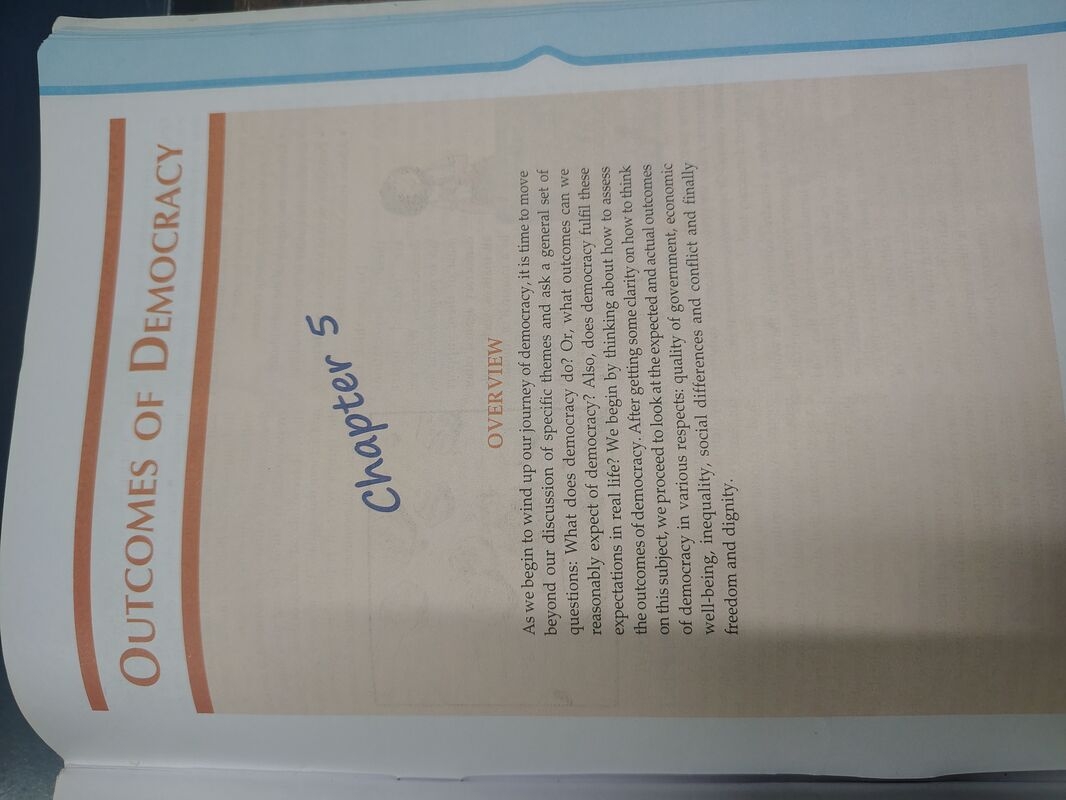
Class 10 Social Science Democratic Politics 2 Chapter 5 Outcomes of Democracy Questions and Answers in English and Hindi
Class 10 Social Science Democratic Politics 2 Chapter 5 Outcomes of Democracy Questions and Answers in English and Hindi
Course Overview
Class 10 Social Science Democratic Politics 2 Chapter 5 Outcomes of Democracy Questions and Answers in English and Hindi
### Class 10 – Democratic Politics
### Chapter: Outcomes of Democracy
### अभ्यास प्रश्न – Exercises (Hindi & English Medium)
नीचे सभी प्रश्नों और उत्तरों को अंग्रेजी एवं हिंदी दोनों भाषाओं में सरल और परीक्षा-उपयोगी भाषा में दिया गया है।
### Q.1 How does democracy produce an accountable, responsive and legitimate government?
प्रश्न: लोकतंत्र किस प्रकार एक जवाबदेह, उत्तरदायी और वैध सरकार का निर्माण करता है?
Answer (English):
Democracy is a form of government in which people rule themselves through their elected representatives. These representatives form the government, make policies and run the administration of the country.
1\. Accountable Government: The government is accountable to the people because it is elected by them. Representatives have to face the people in the next general elections.
2\. Responsive Government: People have the right to know about government decisions. They can question and criticise government policies. Therefore, the government has to consider public opinion before making decisions.
3\. Legitimate Government: A democratic government is legitimate because it is elected by the people through free and fair elections. The party that gets a majority forms the government, while other parties act as the opposition.
उत्तर (हिंदी):
लोकतंत्र शासन का एक ऐसा रूप है जिसमें जनता अपने द्वारा चुने गए प्रतिनिधियों के माध्यम से स्वयं शासन करती है। ये प्रतिनिधि सरकार बनाते हैं, नीतियाँ तैयार करते हैं और देश का प्रशासन चलाते हैं।
1\. जवाबदेह सरकार: लोकतांत्रिक सरकार जनता के प्रति जवाबदेह होती है क्योंकि इसे जनता द्वारा चुना जाता है। निर्वाचित प्रतिनिधियों को अगले आम चुनाव में जनता के सामने जाना पड़ता है।
2\. उत्तरदायी सरकार: जनता को सरकारी निर्णयों की जानकारी प्राप्त करने का अधिकार होता है। वह सरकार की नीतियों पर सवाल उठा सकती है और उनकी आलोचना कर सकती है। इसलिए सरकार को निर्णय लेते समय जनता की राय का ध्यान रखना पड़ता है।
3\. वैध सरकार: लोकतांत्रिक सरकार वैध होती है क्योंकि इसका चुनाव स्वतंत्र एवं निष्पक्ष चुनावों के माध्यम से जनता द्वारा किया जाता है। जिस राजनीतिक दल को बहुमत मिलता है, वह सरकार बनाता है तथा अन्य दल विपक्ष की भूमिका निभाते हैं।
### Q.2 What are the conditions under which democracies accommodate social diversities?
प्रश्न: वे कौन-सी परिस्थितियाँ हैं जिनमें लोकतंत्र सामाजिक विविधताओं को समायोजित करता है?
Answer (English):
Democracy is considered the most suitable form of government for accommodating social diversities and resolving differences.
The following conditions help democracy accommodate social diversity:
* Democracy provides equal rights and opportunities to all citizens.
* It does not discriminate on the basis of caste, religion, colour, sex, race or region.
* Weaker sections of society are given equal voting rights and the right to contest elections.
* In India, seats are reserved for Scheduled Castes (SCs) and Scheduled Tribes (STs) in Parliament and State Legislatures.
* Seats are also reserved for women in local government institutions.
* Every section of society gets an opportunity to elect its representatives and participate in decision-making.
Thus, democracy accommodates social diversity by providing equal representation and opportunities to different social groups.
उत्तर (हिंदी):
लोकतंत्र को सामाजिक विविधताओं को समायोजित करने और विभिन्न सामाजिक समूहों के बीच मतभेदों को सुलझाने के लिए सबसे उपयुक्त शासन व्यवस्था माना जाता है।
लोकतंत्र में सामाजिक विविधताओं को समायोजित करने के लिए निम्नलिखित परिस्थितियाँ आवश्यक हैं:
* लोकतंत्र सभी नागरिकों को समान अधिकार और अवसर प्रदान करता है।
* इसमें जाति, धर्म, रंग, लिंग, नस्ल या क्षेत्र के आधार पर भेदभाव नहीं किया जाता।
* समाज के कमजोर वर्गों को मतदान करने तथा चुनाव लड़ने का समान अधिकार दिया जाता है।
* भारत में अनुसूचित जातियों (SC) और अनुसूचित जनजातियों (ST) के लिए संसद एवं राज्य विधानसभाओं में सीटें आरक्षित हैं।
* स्थानीय स्वशासन संस्थाओं में महिलाओं के लिए भी सीटें आरक्षित हैं।
* समाज के प्रत्येक वर्ग को अपने प्रतिनिधि चुनने और निर्णय लेने की प्रक्रिया में भाग लेने का अवसर मिलता है।
इस प्रकार लोकतंत्र विभिन्न सामाजिक समूहों को समान प्रतिनिधित्व और अवसर प्रदान करके सामाजिक विविधताओं को समायोजित करता है।
### Q.3 Give arguments to support or oppose the following assertions.
प्रश्न: निम्नलिखित कथनों के समर्थन या विरोध में तर्क दीजिए।
### (i) Industrialised countries can afford democracy but the poor need dictatorship to become rich.
औद्योगिक देश लोकतंत्र को अपना सकते हैं, लेकिन गरीब देशों को अमीर बनने के लिए तानाशाही की आवश्यकता होती है।
Answer (English):
We do not agree with this statement. Economic development does not depend only on whether a country has democracy or dictatorship. It depends on several factors such as:
* Population of the country.
* Availability of natural resources.
* Literacy and education levels.
* Cooperation of citizens.
* Government policies and international support.
Therefore, democracy is not an obstacle to economic development.
उत्तर (हिंदी):
हम इस कथन से सहमत नहीं हैं। किसी देश का आर्थिक विकास केवल इस बात पर निर्भर नहीं करता कि वहाँ लोकतंत्र है या तानाशाही। यह कई कारकों पर निर्भर करता है, जैसे:
* देश की जनसंख्या।
* प्राकृतिक संसाधनों की उपलब्धता।
* साक्षरता एवं शिक्षा का स्तर।
* नागरिकों का सहयोग।
* सरकारी नीतियाँ और अंतरराष्ट्रीय सहायता।
इसलिए लोकतंत्र आर्थिक विकास में बाधा नहीं है।
### (ii) Democracy can't reduce inequality of incomes between different citizens.
लोकतंत्र विभिन्न नागरिकों के बीच आय की असमानता को कम नहीं कर सकता।
Answer (English):
We agree with this statement to a large extent. Although democracy provides equal political rights and opportunities to all citizens, economic inequalities still exist.
* There is a wide gap between rich and poor people.
* Wealth is concentrated in the hands of a few people.
* Poor people often lack basic facilities.
* Rich people may influence political decisions through their economic power.
Thus, democracy has not been fully successful in reducing economic inequality.
उत्तर (हिंदी):
हम इस कथन से काफी हद तक सहमत हैं। लोकतंत्र सभी नागरिकों को समान राजनीतिक अधिकार और अवसर प्रदान करता है, फिर भी आर्थिक असमानताएँ बनी रहती हैं।
* अमीर और गरीब लोगों के बीच आय का बड़ा अंतर है।
* संपत्ति कुछ ही लोगों के हाथों में केंद्रित रहती है।
* गरीब लोगों को अक्सर बुनियादी सुविधाएँ प्राप्त नहीं होतीं।
* अमीर लोग अपनी आर्थिक शक्ति के माध्यम से राजनीतिक निर्णयों को प्रभावित कर सकते हैं।
इस प्रकार लोकतंत्र आर्थिक असमानता को पूरी तरह समाप्त करने में सफल नहीं हुआ है।
### (iii) Government in poor countries should spend less on poverty reduction, health, education and spend more on industries and infrastructure.
गरीब देशों की सरकारों को गरीबी उन्मूलन, स्वास्थ्य और शिक्षा पर कम तथा उद्योगों और बुनियादी ढाँचे पर अधिक खर्च करना चाहिए।
Answer (English):
We do not agree with this statement.
Although industries and infrastructure are important for economic development, human resource development is equally important.
* Education increases knowledge and skills.
* Healthcare improves the productivity of citizens.
* Poverty reduction improves living standards.
* Skilled and healthy people contribute to industrial development.
Therefore, governments should invest in education, health, poverty reduction, industries and infrastructure.
उत्तर (हिंदी):
हम इस कथन से सहमत नहीं हैं।
यद्यपि आर्थिक विकास के लिए उद्योग और बुनियादी ढाँचा महत्वपूर्ण हैं, लेकिन मानव संसाधन का विकास भी उतना ही आवश्यक है।
* शिक्षा से ज्ञान और कौशल में वृद्धि होती है।
* स्वास्थ्य सुविधाएँ नागरिकों की कार्यक्षमता बढ़ाती हैं।
* गरीबी उन्मूलन से लोगों का जीवन स्तर बेहतर होता है।
* शिक्षित और स्वस्थ लोग औद्योगिक विकास में योगदान देते हैं।
इसलिए सरकार को शिक्षा, स्वास्थ्य, गरीबी उन्मूलन, उद्योगों और बुनियादी ढाँचे सभी क्षेत्रों पर ध्यान देना चाहिए।
### (iv) In democracy all citizens have one vote, which means that there is absence of any domination and conflict.
लोकतंत्र में सभी नागरिकों के पास एक वोट होता है, जिसका अर्थ है कि वहाँ किसी प्रकार का प्रभुत्व और संघर्ष नहीं होता।
Answer (English):
We do not agree with this statement.
Although democracy provides equal voting rights to all citizens, it does not completely eliminate domination and social conflicts.
* Majority groups may dominate minority groups.
* Social and economic inequalities may continue.
* Different communities may have conflicting interests.
* The demands of weaker sections may sometimes be ignored.
Thus, equal voting rights do not guarantee the complete absence of domination and conflict.
उत्तर (हिंदी):
हम इस कथन से सहमत नहीं हैं।
यद्यपि लोकतंत्र सभी नागरिकों को समान मतदान का अधिकार देता है, लेकिन इससे प्रभुत्व और सामाजिक संघर्ष पूरी तरह समाप्त नहीं होते।
* बहुसंख्यक समूह अल्पसंख्यक समूहों पर प्रभुत्व स्थापित कर सकते हैं।
* सामाजिक और आर्थिक असमानताएँ बनी रह सकती हैं।
* विभिन्न समुदायों के हितों में टकराव हो सकता है।
* कमजोर वर्गों की माँगों की कभी-कभी अनदेखी की जा सकती है।
इसलिए समान मतदान का अधिकार होने का अर्थ यह नहीं है कि समाज में प्रभुत्व और संघर्ष पूरी तरह समाप्त हो गए हैं।
### Q.4 Identify the challenges to democracy in the following descriptions. Also suggest policy/institutional mechanisms to deepen democracy.
प्रश्न: निम्नलिखित विवरणों में लोकतंत्र के सामने आने वाली चुनौतियों की पहचान कीजिए। साथ ही लोकतंत्र को मजबूत बनाने के लिए नीतिगत या संस्थागत उपाय सुझाइए।
### (i) Following a High Court directive, a temple in Orissa that had separate entry doors for Dalits and non-Dalits allowed entry for all from the same door.
उड़ीसा के एक मंदिर में दलितों और गैर-दलितों के लिए अलग-अलग प्रवेश द्वार थे। उच्च न्यायालय के निर्देश के बाद सभी को एक ही द्वार से प्रवेश की अनुमति दी गई।
Answer (English):
Challenge: This situation highlights the challenge of social inequality and caste-based discrimination.
Measures:
* Strict implementation of laws against caste discrimination.
* Awareness campaigns to promote social equality.
* Equal access to all public places for every citizen.
* Promotion of constitutional values and human dignity.
उत्तर (हिंदी):
चुनौती: यह स्थिति सामाजिक असमानता और जाति आधारित भेदभाव की चुनौती को दर्शाती है।
उपाय:
* जातिगत भेदभाव के विरुद्ध कानूनों का सख्ती से पालन किया जाए।
* सामाजिक समानता के लिए जागरूकता अभियान चलाए जाएँ।
* सभी नागरिकों को सार्वजनिक स्थानों पर समान अधिकार दिए जाएँ।
* संवैधानिक मूल्यों और मानवीय गरिमा को बढ़ावा दिया जाए।
### (ii) A large number of farmers are committing suicide in different states of India.
भारत के विभिन्न राज्यों में बड़ी संख्या में किसान आत्महत्या कर रहे हैं।
Answer (English):
Challenge: This highlights the challenge of economic inequality, poverty and agrarian distress.
Measures:
* Provide affordable agricultural loans.
* Ensure fair prices for agricultural products.
* Improve irrigation and crop insurance facilities.
* Provide financial and institutional support to farmers.
उत्तर (हिंदी):
चुनौती: यह आर्थिक असमानता, गरीबी और कृषि संकट की चुनौती को दर्शाता है।
उपाय:
* किसानों को सस्ती दरों पर कृषि ऋण उपलब्ध कराया जाए।
* कृषि उत्पादों का उचित मूल्य सुनिश्चित किया जाए।
* सिंचाई और फसल बीमा की सुविधाओं में सुधार किया जाए।
* किसानों को वित्तीय एवं संस्थागत सहायता प्रदान की जाए।
### (iii) Following allegations of killing three civilians in Gandwara in a fake encounter by Jammu and Kashmir Police, an enquiry has been ordered.
जम्मू-कश्मीर पुलिस पर गांदवारा में फर्जी मुठभेड़ में तीन नागरिकों की हत्या के आरोप लगने के बाद जाँच के आदेश दिए गए।
Answer (English):
Challenge: This highlights the lack of accountability and responsibility of law-enforcement agencies.
Measures:
* Conduct an independent and impartial investigation.
* Ensure accountability of police officials.
* Take strict action against those found guilty.
* Protect citizens' fundamental rights and dignity.
उत्तर (हिंदी):
चुनौती: यह कानून लागू करने वाली एजेंसियों की जवाबदेही और जिम्मेदारी की कमी को दर्शाता है।
उपाय:
* स्वतंत्र एवं निष्पक्ष जाँच कराई जाए।
* पुलिस अधिकारियों की जवाबदेही सुनिश्चित की जाए।
* दोषी पाए जाने वाले अधिकारियों के विरुद्ध सख्त कार्रवाई की जाए।
* नागरिकों के मौलिक अधिकारों और गरिमा की रक्षा की जाए।
### Q.5 In the context of democracies, which of the following ideas is correct? Democracies have successfully eliminated:
प्रश्न: लोकतंत्र के संदर्भ में निम्नलिखित में से कौन-सा विचार सही है? लोकतंत्र ने सफलतापूर्वक किसे समाप्त किया है?
A. Conflicts among people – लोगों के बीच संघर्ष।
B. Economic inequalities among people – लोगों के बीच आर्थिक असमानताएँ।
C. Differences of opinion about how marginalised sections are to be treated – वंचित वर्गों के साथ व्यवहार को लेकर मतभेद।
D. The idea of political inequality – राजनीतिक असमानता की अवधारणा।
Correct Answer: (D) The idea of political inequality.
सही उत्तर: (D) राजनीतिक असमानता की अवधारणा।
Explanation (English): Democracy is based on political equality. Every adult citizen has one vote and every vote has equal value.
व्याख्या (हिंदी): लोकतंत्र राजनीतिक समानता पर आधारित है। प्रत्येक वयस्क नागरिक को एक वोट का अधिकार प्राप्त है और प्रत्येक वोट का समान महत्व होता है।
### Q.6 In the context of assessing democracy, which among the following is the odd one out? Democracies need to ensure:
प्रश्न: लोकतंत्र का मूल्यांकन करने के संदर्भ में निम्नलिखित में से कौन-सा विकल्प अलग है? लोकतंत्र को निम्नलिखित सुनिश्चित करना चाहिए:
A. Free and fair elections – स्वतंत्र एवं निष्पक्ष चुनाव।
B. Dignity of the individual – व्यक्ति की गरिमा।
C. Majority rule – बहुमत का शासन।
D. Equal treatment before law – कानून के समक्ष समान व्यवहार।
Correct Answer: (C) Majority rule.
सही उत्तर: (C) बहुमत का शासन।
Explanation (English): Democracy must ensure free and fair elections, individual dignity and equality before law. Majority rule alone cannot be considered a sufficient condition for a successful democracy.
व्याख्या (हिंदी): लोकतंत्र में स्वतंत्र एवं निष्पक्ष चुनाव, व्यक्ति की गरिमा और कानून के समक्ष समानता सुनिश्चित होनी चाहिए। केवल बहुमत का शासन सफल लोकतंत्र की पर्याप्त शर्त नहीं है।
### Q.7 Studies on political and social inequalities in democracy show that:
प्रश्न: लोकतंत्र में राजनीतिक और सामाजिक असमानताओं पर किए गए अध्ययन क्या दर्शाते हैं?
A. Democracy and development go together. – लोकतंत्र और विकास साथ-साथ चलते हैं।
B. Inequalities exist in democracies. – लोकतंत्र में असमानताएँ मौजूद रहती हैं।
C. Inequalities do not exist under dictatorship. – तानाशाही में असमानताएँ नहीं होतीं।
D. Dictatorship is better than democracy. – तानाशाही लोकतंत्र से बेहतर है।
Correct Answer: (B) Inequalities exist in democracies.
सही उत्तर: (B) लोकतंत्र में असमानताएँ मौजूद रहती हैं।
Explanation (English): Democracy provides political equality, but social and economic inequalities may still exist.
व्याख्या (हिंदी): लोकतंत्र राजनीतिक समानता प्रदान करता है, लेकिन इसके बावजूद सामाजिक और आर्थिक असमानताएँ बनी रह सकती हैं।
### Q.8 Read the passage below:
प्रश्न: नीचे दिए गए गद्यांश को पढ़िए और प्रश्नों के उत्तर दीजिए।
### Passage (English)
Nannu is a daily wage earner. He lives in Welcome Mazdoor Colony, a slum habitation in East Delhi. He lost his ration card and applied for a duplicate one in January 2004.
He made several visits to the local Food and Civil Supplies Office for the next three months. However, the clerks and officials did not pay attention to him or inform him about the status of his application.
Finally, he filed an application under the Right to Information (RTI) Act, asking for:
* The daily progress made on his application.
* The names of the officials responsible for processing his application.
* The action that would be taken against officials for their inaction.
Within a week of filing the RTI application, an inspector from the Food Department visited him and informed him that his ration card had been prepared.
When Nannu went to collect his card the next day, he received very polite treatment from the Food and Supply Officer (FSO), who requested him to withdraw his RTI application because his work had already been completed.
### गद्यांश (हिंदी)
नन्नू एक दिहाड़ी मजदूर है। वह पूर्वी दिल्ली की वेलकम मजदूर कॉलोनी नामक झुग्गी बस्ती में रहता है। जनवरी 2004 में उसका राशन कार्ड खो गया और उसने नए डुप्लीकेट राशन कार्ड के लिए आवेदन किया।
अगले तीन महीनों तक वह स्थानीय खाद्य एवं नागरिक आपूर्ति कार्यालय के कई चक्कर लगाता रहा। लेकिन वहाँ के कर्मचारियों और अधिकारियों ने न तो उसकी बात पर ध्यान दिया और न ही उसे उसके आवेदन की स्थिति के बारे में जानकारी दी।
अंततः उसने सूचना का अधिकार (RTI) अधिनियम के तहत एक आवेदन दिया, जिसमें उसने निम्नलिखित जानकारियाँ माँगीं:
* उसके आवेदन पर प्रतिदिन हुई प्रगति की जानकारी।
* उसके आवेदन पर कार्रवाई करने के लिए जिम्मेदार अधिकारियों के नाम।
* लापरवाही करने वाले अधिकारियों के विरुद्ध की जाने वाली कार्रवाई की जानकारी।
RTI आवेदन देने के एक सप्ताह के भीतर खाद्य विभाग का एक निरीक्षक उसके पास आया और बताया कि उसका राशन कार्ड बन चुका है।
अगले दिन जब नन्नू अपना राशन कार्ड लेने गया, तो खाद्य एवं आपूर्ति अधिकारी (FSO) ने उसके साथ बहुत अच्छा व्यवहार किया। अधिकारी ने उससे RTI आवेदन वापस लेने का अनुरोध किया क्योंकि उसका काम पूरा हो चुका था।
### Questions and Answers
Q. (i) What does Nannu's example show?
प्रश्न: नन्नू का उदाहरण क्या दर्शाता है?
Answer (English):
Nannu's example shows the importance of the Right to Information (RTI) Act in making government officials accountable and transparent. It empowers ordinary citizens to question government officials and get their work done.
उत्तर (हिंदी):
नन्नू का उदाहरण सूचना का अधिकार (RTI) अधिनियम के महत्व को दर्शाता है। यह सरकारी अधिकारियों को जवाबदेह और पारदर्शी बनाता है। इसके माध्यम से आम नागरिक सरकारी अधिकारियों से सवाल पूछ सकते हैं और अपने अधिकारों की रक्षा कर सकते हैं।
Q. (ii) What impact did Nannu's action have on officials?
प्रश्न: नन्नू की कार्रवाई का सरकारी अधिकारियों पर क्या प्रभाव पड़ा?
Answer (English):
Nannu's RTI application created pressure on government officials. They became more responsible and completed his work within a week. The officials also started treating him politely because they knew that their actions could be questioned.
उत्तर (हिंदी):
नन्नू के RTI आवेदन से सरकारी अधिकारियों पर दबाव पड़ा। वे अधिक जिम्मेदार हो गए और एक सप्ताह के भीतर उसका काम पूरा कर दिया। अधिकारियों ने उसके साथ विनम्र व्यवहार भी किया क्योंकि उन्हें पता था कि उनकी कार्यप्रणाली पर सवाल उठाए जा सकते हैं।
Q. (iii) Ask your parents their experiences when they approach government officials to attend to their problems.
प्रश्न: अपने माता-पिता से पूछिए कि जब वे अपनी समस्याओं के समाधान के लिए सरकारी अधिकारियों के पास जाते हैं, तो उनका अनुभव कैसा रहता है?
Answer (English – Sample Answer):
My parents have had both positive and negative experiences while approaching government officials. Sometimes their work is completed on time, but sometimes they have to make repeated visits to government offices. They believe that transparency, accountability and proper implementation of the RTI Act can improve public services.
उत्तर (हिंदी – उदाहरणात्मक उत्तर):
मेरे माता-पिता को सरकारी अधिकारियों के पास अपनी समस्याएँ लेकर जाने पर अच्छे और बुरे दोनों प्रकार के अनुभव हुए हैं। कभी-कभी उनका काम समय पर हो जाता है, लेकिन कई बार उन्हें सरकारी कार्यालयों के बार-बार चक्कर लगाने पड़ते हैं। उनका मानना है कि पारदर्शिता, जवाबदेही और सूचना के अधिकार का उचित क्रियान्वयन सरकारी सेवाओं में सुधार ला सकता है।
### Important Exam Revision – महत्वपूर्ण परीक्षा पुनरावृत्ति
| Topic / विषय | Important Point / महत्वपूर्ण तथ्य |
| ------------------------- | --------------------------------- |
| Accountable Government | जवाबदेह सरकार |
| Responsive Government | उत्तरदायी सरकार |
| Legitimate Government | वैध सरकार |
| Social Diversity | सामाजिक विविधता |
| Political Equality | राजनीतिक समानता |
| Economic Inequality | आर्थिक असमानता |
| RTI Act | सूचना का अधिकार अधिनियम
, 2005 |
| Universal Adult Franchise | सार्वभौमिक वयस्क मताधिकार |
| Free and Fair Elections | स्वतंत्र एवं निष्पक्ष चुनाव |
| Majority Rule | बहुमत का शासन |
महत्वपूर्ण MCQ उत्तर:
* Q.5 – (D)
* Q.6 – (C)
* Q.7 – (B)
नोट: Q.6 के म
Course Curriculum
No Curriculum Added Yet
Course content will be added soon.
This course is offered directly by the platform and is not tied to a specific instructor.
0
0 Reviews
No Reviews Yet
Be the first to review this course.