-
Mayur Vihar 3 Delhi, 110096 India
Free Course
Class 10 History Chapter 1 यूरोप में राष्ट्रवाद का उदय (The Rise of Nationalism in Europe) important questions and Answers
Class 10 History Chapter 1 यूरोप में राष्ट्रवाद का उदय (The Rise of Nationalism in Europe) important questions and Answers in English & Hindi
Course Overview
Class 10 History – Chapter 1
यूरोप में राष्ट्रवाद का उदय (The Rise of Nationalism in Europe)
इस अध्याय के महत्वपूर्ण Previous Year Questions (PYQ), बार-बार पूछे जाने वाले प्रश्न और बोर्ड परीक्षा के संभावित प्रश्न नीचे हिंदी एवं English दोनों भाषाओं में दिए गए हैं।
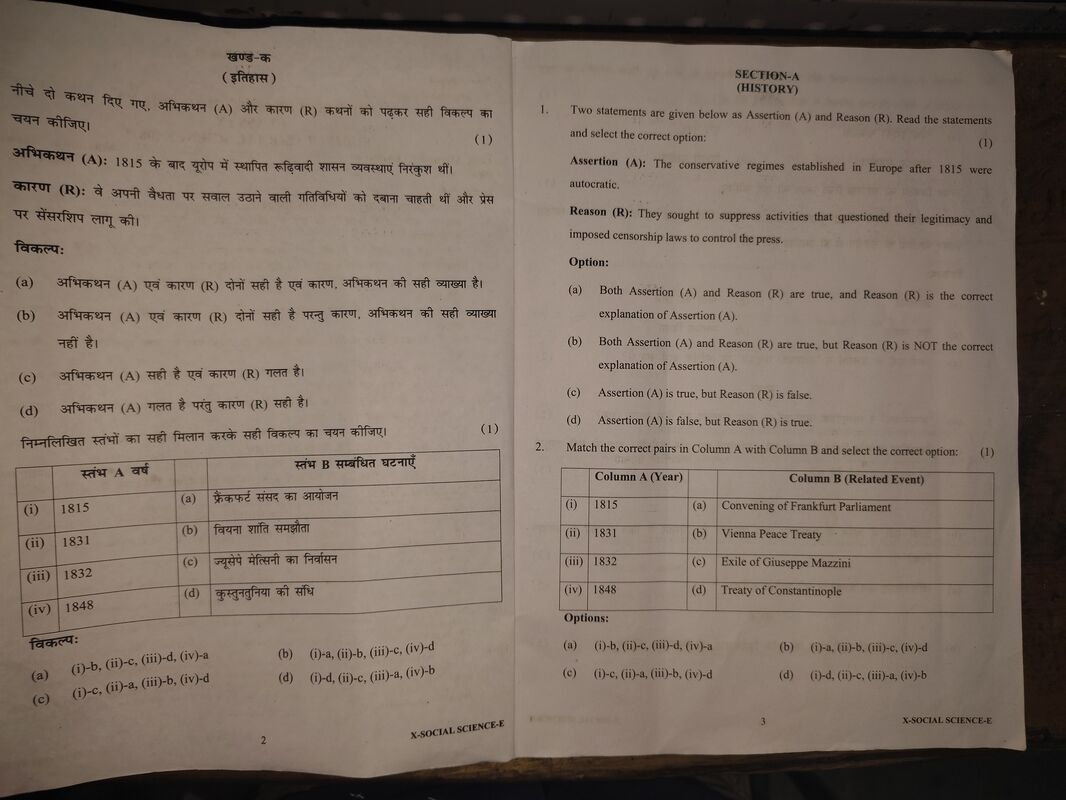
### Section A – महत्वपूर्ण MCQ (1 Mark)
Q1. फ्रांसीसी क्रांति कब हुई थी? / When did the French Revolution take place?
(a) 1776 (b) 1789 (c) 1815 (d) 1830
उत्तर / Answer: (b) 1789
Q2. वियना कांग्रेस की मेजबानी किसने की थी? / Who hosted the Congress of Vienna?
(a) Giuseppe Mazzini (b) Otto von Bismarck (c) Duke Metternich (d) Napoleon
Answer: (c) Duke Metternich
Q3. यंग इटली की स्थापना किसने की थी? / Who founded Young Italy?
(a) Cavour (b) Giuseppe Mazzini (c) Garibaldi (d) Victor Emmanuel II
Answer: (b) Giuseppe Mazzini
Q4. जर्मनी के एकीकरण का नेतृत्व किसने किया? / Who led the unification of Germany?
(a) Napoleon (b) Bismarck (c) Mazzini (d) Metternich
Answer: (b) Otto von Bismarck
Q5. फ्रैंकफर्ट संसद कहाँ आयोजित की गई थी? / Where was the Frankfurt Parliament convened?
(a) Versailles Palace (b) St. Paul's Church (c) Vienna (d) Berlin
Answer: (b) St. Paul's Church
Q6. जर्मनी का एकीकरण किस वर्ष पूरा हुआ? / In which year was Germany unified?
(a) 1848 (b) 1861 (c) 1871 (d) 1875
Answer: (c) 1871
Q7. जॉलवेरिन (Zollverein) क्या था? / What was Zollverein?
(a) सैन्य संगठन / Military organisation (b) सीमा शुल्क संघ / Customs Union (c) राजनीतिक दल / Political party (d) धार्मिक संगठन / Religious organisation
Answer: (b) सीमा शुल्क संघ / Customs Union
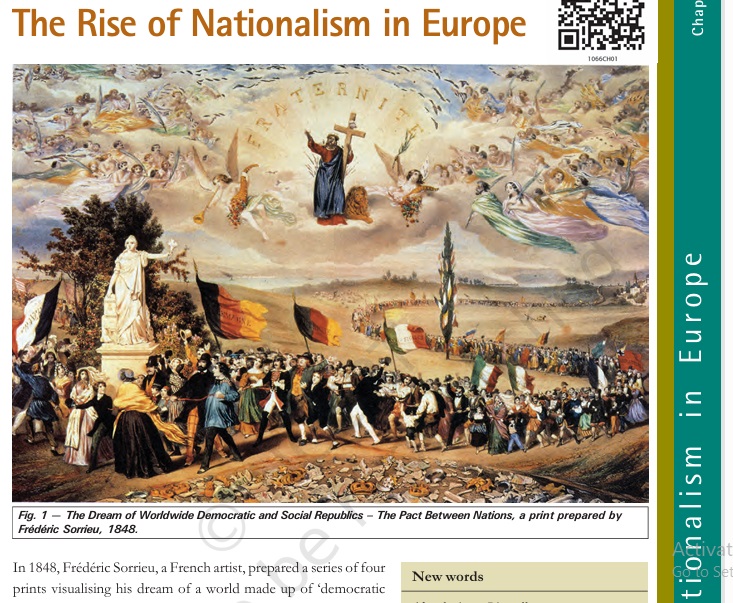
Q8. फ्रांस की राष्ट्रीय प्रतीक महिला का नाम क्या था? / What was the female allegory of France called?
Answer: Marianne (मैरिएन)
Q9. जर्मनी की राष्ट्रीय प्रतीक महिला कौन थी? / Who was the female allegory of Germany?
Answer: Germania (जर्मेनिया)
Q10. यूनानी स्वतंत्रता संग्राम कब शुरू हुआ? / When did the Greek War of Independence begin?
Answer: 1821
### Section B – लघु उत्तरीय प्रश्न (2–3 Marks)
### Q1. राष्ट्रवाद क्या है?
What is Nationalism?
उत्तर (Hindi): राष्ट्रवाद एक ऐसी भावना है जिसमें किसी देश के लोग समान इतिहास, संस्कृति, भाषा और राजनीतिक पहचान के आधार पर स्वयं को एक राष्ट्र का हिस्सा मानते हैं। यह लोगों में एकता और देश के प्रति निष्ठा की भावना पैदा करता है।
Answer (English): Nationalism is a feeling of unity and belonging among people who share a common history, culture, language or political identity. It creates loyalty and attachment towards a nation.
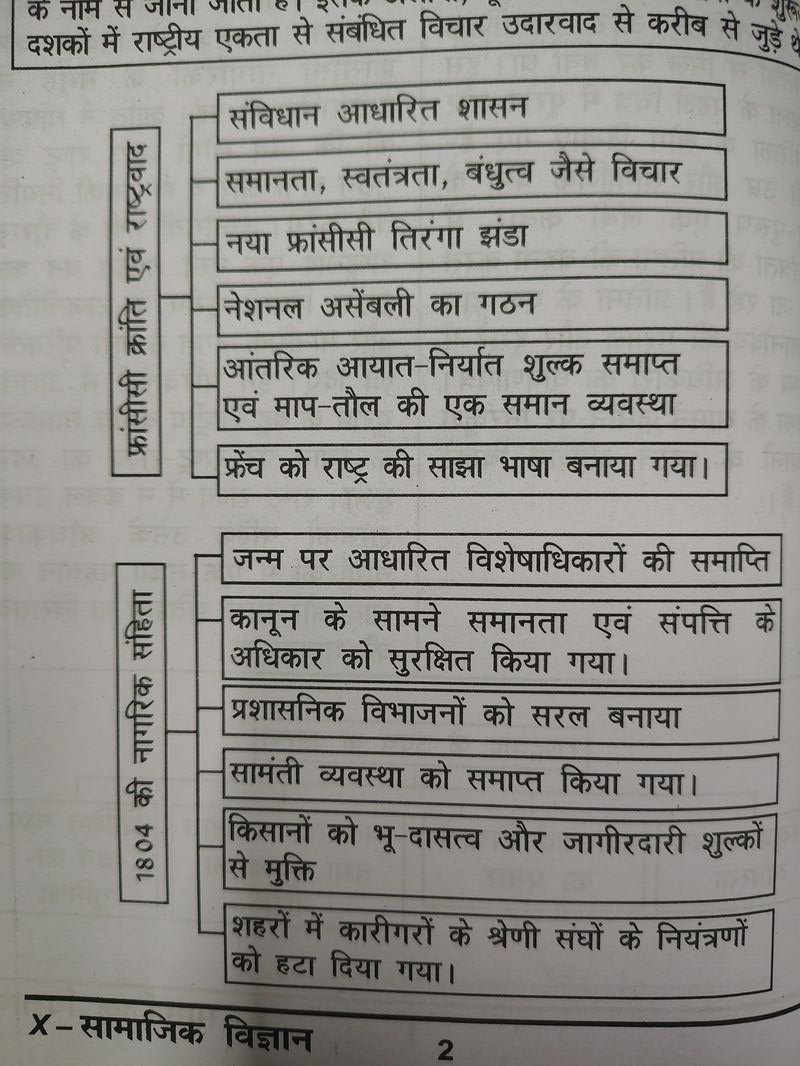
### Q2. फ्रांसीसी क्रांति ने यूरोप में राष्ट्रवाद के विकास में किस प्रकार योगदान दिया?
How did the French Revolution contribute to the growth of nationalism in Europe?
उत्तर (Hindi):
* इसने संप्रभुता का अधिकार राजा से जनता को दिया।
* राष्ट्रीय ध्वज और राष्ट्रगान जैसे प्रतीकों को बढ़ावा दिया।
* समान कानून और समान नागरिक अधिकार स्थापित किए।
* लोगों में राष्ट्रीय एकता की भावना विकसित की।
Answer (English):
* It transferred sovereignty from the monarchy to the people.
* It promoted national symbols like the national flag and anthem.
* It introduced uniform laws and equal citizenship rights.
* It developed a sense of national unity.
### Q3. वियना कांग्रेस के प्रमुख उद्देश्य क्या थे?
What were the main objectives of the Congress of Vienna?
उत्तर (Hindi):
* यूरोप में राजतंत्र की पुनः स्थापना करना।
* नेपोलियन द्वारा किए गए राजनीतिक परिवर्तनों को समाप्त करना।
* फ्रांस की शक्ति को सीमित करना।
* यूरोप में शक्ति संतुलन स्थापित करना।
Answer (English):
* To restore monarchies in Europe.
* To reverse the political changes made by Napoleon.
* To limit the power of France.
* To establish a balance of power in Europe.
### Q4. जॉलवेरिन क्या था? इसके कोई तीन लाभ बताइए।
What was Zollverein? Mention any three benefits.
उत्तर (Hindi):
जॉलवेरिन 1834 में प्रशा की पहल पर जर्मन राज्यों द्वारा बनाया गया सीमा शुल्क संघ था।
लाभ:
* सीमा शुल्क बाधाएँ समाप्त हुईं।
* व्यापार और आर्थिक विकास को बढ़ावा मिला।
* विभिन्न जर्मन राज्यों के बीच आर्थिक एकता बढ़ी।
Answer (English):
Zollverein was a customs union formed in 1834 at the initiative of Prussia among the German states.
Benefits:
* It removed tariff barriers.
* It encouraged trade and economic development.
* It promoted economic unity among German states.
### Q5. ग्यूसेप मैजिनी कौन था?
Who was Giuseppe Mazzini?
उत्तर (Hindi): ग्यूसेप मैजिनी इटली का एक महान क्रांतिकारी राष्ट्रवादी था। उसने 1831 में यंग इटली और 1834 में यंग यूरोप नामक संगठनों की स्थापना की। उसका उद्देश्य इटली का एकीकरण और स्वतंत्रता प्राप्त करना था।
Answer (English): Giuseppe Mazzini was a great Italian revolutionary nationalist. He founded Young Italy in 1831 and Young Europe in 1834. His aim was to unify Italy and achieve its independence.
### Q6. उदारवाद (Liberalism) से आप क्या समझते हैं?
What do you understand by Liberalism?
उत्तर (Hindi): उदारवाद का अर्थ है व्यक्ति की स्वतंत्रता, कानून के समक्ष समानता, प्रतिनिधि सरकार और संविधान में विश्वास। आर्थिक क्षेत्र में इसका अर्थ बाजार की स्वतंत्रता और व्यापारिक प्रतिबंधों को समाप्त करना था।
Answer (English): Liberalism means individual freedom, equality before the law, representative government and constitutional rights. Economically, it supported free markets and the removal of trade restrictions.
### Q7. 1848 की उदारवादी क्रांति की प्रमुख माँगें क्या थीं?
What were the main demands of the Liberal Revolution of 1848?
उत्तर (Hindi):
* संविधान और प्रतिनिधि सरकार की स्थापना।
* प्रेस और संगठन की स्वतंत्रता।
* राष्ट्रीय एकीकरण।
* समान राजनीतिक अधिकार।
Answer (English):
* Establishment of a constitution and representative government.
* Freedom of the press and association.
* National unification.
* Equal political rights.
### Q8. रोमांटिकवाद ने राष्ट्रवाद को कैसे बढ़ावा दिया?
How did Romanticism promote nationalism?
उत्तर (Hindi): रोमांटिकवाद ने कला, कविता, संगीत और लोक-संस्कृति के माध्यम से राष्ट्रीय भावना को बढ़ावा दिया। इसने लोगों को अपनी परंपराओं, संस्कृति और साझा विरासत के प्रति जागरूक किया।
Answer (English): Romanticism promoted nationalism through art, poetry, music and folk culture. It encouraged people to value their traditions, culture and shared heritage.
### Section C – दीर्घ उत्तरीय प्रश्न (5 Marks)
Most Important for Board Exam
### Q1. फ्रांसीसी क्रांति के कारणों और परिणामों का वर्णन कीजिए।
Describe the causes and consequences of the French Revolution.
उत्तर (Hindi):
फ्रांसीसी क्रांति 1789 में हुई। इसके प्रमुख कारण एवं परिणाम निम्नलिखित थे:
कारण:
* फ्रांस में राजशाही की निरंकुशता।
* समाज में असमानता और विशेषाधिकार प्राप्त वर्ग।
* किसानों और सामान्य जनता पर करों का भारी बोझ।
* आर्थिक संकट और खाद्यान्न की कमी।
* स्वतंत्रता, समानता और बंधुत्व के विचारों का प्रसार।
परिणाम:
* राजशाही की निरंकुश सत्ता को चुनौती मिली।
* संप्रभुता जनता में निहित हुई।
* समान नागरिक अधिकारों की अवधारणा विकसित हुई।
* राष्ट्रीय प्रतीकों और राष्ट्रीय एकता को बढ़ावा मिला।
* यूरोप के अन्य देशों में राष्ट्रवाद का प्रसार हुआ।
Answer (English):
The French Revolution took place in 1789. Its major causes and consequences were:
Causes:
* Absolute monarchy in France.
* Social inequality and privileges of the upper classes.
* Heavy taxation on common people and peasants.
* Economic crisis and food shortages.
* Spread of ideas of liberty, equality and fraternity.
Consequences:
* Absolute monarchy was challenged.
* Sovereignty was transferred to the people.
* The idea of equal citizenship developed.
* National symbols and national unity were promoted.
* Nationalism spread across Europe.
### Q2. जर्मनी के एकीकरण की प्रक्रिया का वर्णन कीजिए।
Describe the process of German unification.
उत्तर (Hindi):
* 1848 में जर्मन राष्ट्रवादी नेताओं ने फ्रैंकफर्ट संसद के माध्यम से जर्मनी को एकीकृत करने का प्रयास किया।
* यह प्रयास असफल रहा।
* प्रशा ने जर्मनी के एकीकरण का नेतृत्व किया।
* प्रशा के मुख्यमंत्री ओटो वॉन बिस्मार्क ने इस प्रक्रिया में महत्वपूर्ण भूमिका निभाई।
* बिस्मार्क ने सात वर्षों में डेनमार्क, ऑस्ट्रिया और फ्रांस के विरुद्ध तीन युद्ध लड़े।
* जनवरी 1871 में वर्साय के महल में प्रशा के राजा विलियम प्रथम को जर्मनी का सम्राट घोषित किया गया।
Answer (English):
* In 1848, German nationalists attempted to unify Germany through the Frankfurt Parliament.
* This attempt failed.
* Prussia took the leadership of German unification.
* Otto von Bismarck, the Chief Minister of Prussia, played a major role.
* Bismarck fought three wars against Denmark, Austria and France over seven years.
* In January 1871, William I was proclaimed German Emperor at the Palace of Versailles.
### Q3. इटली के एकीकरण की प्रक्रिया का वर्णन कीजिए।
Describe the process of Italian unification.
उत्तर (Hindi):
* 19वीं शताब्दी के मध्य में इटली कई राज्यों में विभाजित था।
* सार्डिनिया-पीडमॉण्ट ने एकीकरण का नेतृत्व किया।
* काउंट कैमिलो डी कैवूर ने इस प्रक्रिया में महत्वपूर्ण भूमिका निभाई।
* 1859 में फ्रांस की सहायता से ऑस्ट्रियाई सेनाओं को हराया गया।
* ग्यूसेप गैरीबाल्डी ने 1860 में दक्षिणी इटली में अभियान चलाया।
* 1861 में विक्टर इमैनुएल द्वितीय को एकीकृत इटली का राजा घोषित किया गया।
* 1870 में रोम को इटली में शामिल किया गया।
Answer (English):
* In the mid-nineteenth century, Italy was divided into several states.
* Sardinia-Piedmont led the process of unification.
* Count Camillo de Cavour played an important role.
* In 1859, Austrian forces were defeated with French assistance.
* Giuseppe Garibaldi led an expedition in southern Italy in 1860.
* In 1861, Victor Emmanuel II was proclaimed King of unified Italy.
* Rome was incorporated into Italy in 1870.
### Q4. 1848 की फ्रैंकफर्ट संसद का वर्णन कीजिए। यह असफल क्यों हुई?
Describe the Frankfurt Parliament. Why did it fail?
उत्तर (Hindi):
* 18 मई 1848 को फ्रैंकफर्ट के सेंट पॉल चर्च में संसद बुलाई गई।
* इसमें विभिन्न जर्मन राज्यों के 831 निर्वाचित प्रतिनिधि शामिल हुए।
* इसका उद्देश्य एकीकृत जर्मनी के लिए संविधान बनाना था।
* संसद ने प्रशा के राजा फ्रेडरिक विलियम चतुर्थ को जर्मन सम्राट का ताज देने का प्रस्ताव रखा।
* राजा ने यह प्रस्ताव अस्वीकार कर दिया।
* सेना और राजतंत्र के विरोध के कारण संसद सफल नहीं हो सकी।
* महिलाओं को राजनीतिक अधिकार नहीं दिए गए और वे केवल दर्शक के रूप में उपस्थित थीं।
Answer (English):
* On 18 May 1848, an assembly was convened in St. Paul's Church in Frankfurt.
* It consisted of 831 elected representatives from different German states.
* Its aim was to draft a constitution for a unified Germany.
* The Parliament offered the crown of a unified Germany to Frederick William IV, King of Prussia.
* He rejected the offer.
* Opposition from the monarchy and military led to its failure.
* Women were denied political rights and could participate only as observers.
### Q5. यूरोप में राष्ट्रवाद के विकास में संस्कृति की क्या भूमिका थी?
What was the role of culture in the development of nationalism in Europe?
उत्तर (Hindi):
* रोमांटिक कलाकारों और कवियों ने राष्ट्रीय भावना को बढ़ावा दिया।
* लोकगीतों और लोकनृत्यों ने राष्ट्रीय पहचान को मजबूत किया।
* भाषा ने लोगों को एकजुट करने में महत्वपूर्ण भूमिका निभाई।
* पोलैंड में संगीत और भाषा के माध्यम से राष्ट्रीय भावना जीवित रखी गई।
* कला और साहित्य ने साझा इतिहास और विरासत को लोकप्रिय बनाया।
Answer (English):
* Romantic artists and poets promoted national feelings.
* Folk songs and folk dances strengthened national identity.
* Language played an important role in uniting people.
* In Poland, music and language helped preserve national identity.
* Art and literature popularised shared history and heritage.
### Section D – अन्य महत्वपूर्ण PYQ
| प्रश्न / Question | अंक / Marks |
| ----------------------------------------------------------------------------------------------------------------------------------- | ----------- |
| मारियान और जर्मेनिया कौन थीं? / Who were Marianne and Germania? | 2 |
| रूढ़िवाद क्या था? / What was Conservatism? | 2 |
| यूनानी स्वतंत्रता संग्राम पर टिप्पणी लिखिए। / Write a note on the Greek War of Independence. | 3 |
| 1830 की जुलाई क्रांति का क्या महत्व था? / What was the significance of the July Revolution of 1830? | 3 |
| बाल्कन क्षेत्र में राष्ट्रवादी तनाव के कारण बताइए। / Explain the causes of nationalist tension in the Balkan region. | 5 |
| नेपोलियन की प्रशासनिक व्यवस्था की विशेषताएँ बताइए। / Explain the features of the Napoleonic administrative system. | 3 |
| राष्ट्र की रूपकात्मक छवि से क्या तात्पर्य है? / What is meant by the allegory of a nation? | 2 |
| यूरोप में राष्ट्रवाद और साम्राज्यवाद के बीच संबंध समझाइए। / Explain the relationship between nationalism and imperialism in Europe. | 5 |
### Section E – Important Dates (महत्वपूर्ण तिथियाँ)
| वर्ष / Year | घटना / Event |
| ----------- | ---------------------------------------------------------------- |
| 1789 | फ्रांसीसी क्रांति / French Revolution |
| 1804 | नेपोलियन नागरिक संहिता / Napoleonic Civil Code |
| 1815 | वियना कांग्रेस / Congress of Vienna |
| 1821 | यूनानी स्वतंत्रता संग्राम शुरू / Greek War of Independence began |
| 1830 | जुलाई क्रांति / July Revolution |
| 1831 | यंग इटली की स्थापना / Young Italy founded |
| 1834 | जॉलवेरिन की स्थापना / Zollverein established |
| 1848 | फ्रैंकफर्ट संसद / Frankfurt Parliament |
| 1861 | इटली का एकीकरण / Unification of Italy |
| 1871 | जर्मनी का एकीकरण / Unification of Germany |
### परीक्षा के लिए सबसे महत्वपूर्ण 10 प्रश्न
इन प्रश्नों को विशेष रूप से तैयार करें:
* फ्रांसीसी क्रांति ने राष्ट्रवाद को कैसे बढ़ावा दिया?
* जर्मनी के एकीकरण की प्रक्रिया समझाइए।
* इटली के एकीकरण की प्रक्रिया समझाइए।
* वियना कांग्रेस के उद्देश्य एवं परिणाम लिखिए।
* फ्रैंकफर्ट संसद की असफलता के कारण बताइए।
* जॉलवेरिन क्या था? इसके महत्व को समझाइए।
* ग्यूसेप मैजिनी का राष्ट्रवाद में योगदान बताइए।
* यूरोप में राष्ट्रवाद के विकास में संस्कृति की भूमिका बताइए।
* बाल्कन क्षेत्र में राष्ट्रवादी तनाव के कारण समझाइए।
* मारियान और जर्मेनिया की विशेषताएँ बताइए।
Course Curriculum
No Curriculum Added Yet
Course content will be added soon.
This course is offered directly by the platform and is not tied to a specific instructor.
0
0 Reviews
No Reviews Yet
Be the first to review this course.